↓
 

Madison Brick & Stone

Brick & Stone Masons in Madison, AL

Madison Brick & Stone
  • Home
  • Brick Masonry
  • Stone Masonry
  • Indoor Fireplaces
  • Outdoor Fireplace
Home→Tags brick masonry - Page 4 << 1 2 3 4 5 >>

Tag Archives: brick masonry

Post navigation

← Older posts
Newer posts →

Brick Repair vs. Brick Replacement: How to Know Which You Need

Madison Brick & Stone Posted on May 29, 2026 by madisonBSMay 27, 2026
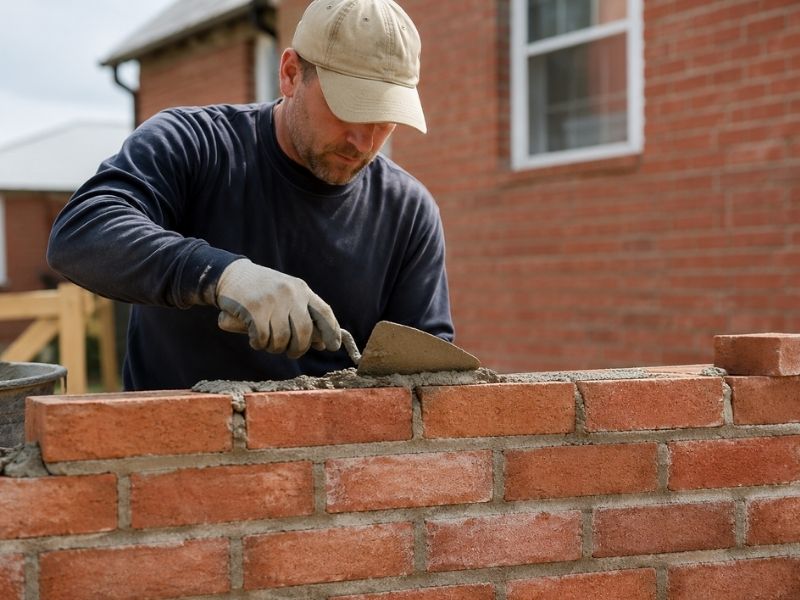
Mason repairing a residential brick wall by applying fresh mortar during brick repair and restoration work

Brick repair is often the first thing homeowners ask about when they spot damage on a wall, step, or column. Not every situation calls for the same solution though. A small crack near a window is a different job than brick wall repair on a section that’s been taking water damage for years. Choosing the wrong approach costs more in the long run, and patching deep damage only delays a bigger problem.

Here’s how to tell the difference before you call anyone.

What Separates Repair from Replacement

The short answer: depth of damage and structural involvement.

Repair works when the brick itself is still solid. If the problem is limited to the mortar joints, a small crack, or minor surface wear, a mason can fix it without touching the brick at all.

Replacement becomes necessary when the brick has broken down structurally. Crumbling faces, deep fractures that run through the full thickness of the brick, or water damage that has compromised the core all point toward pulling the brick out and putting in new material.

One damaged brick in a wall doesn’t mean the whole section needs to come out. Ten damaged bricks in the same area, all showing the same pattern of failure, is a different situation.

When Brick Repair Is the Right Call

The Damage Is in the Mortar, Not the Brick

Mortar wears out faster than brick. A brick wall can last well over 100 years, but the mortar holding it together typically needs attention every 25 to 30 years. If the joints are crumbling, recessed, or cracking while the bricks themselves feel solid and show no surface flaking, repair is the right move.

A mason will cut out the damaged mortar to a depth of about 3/4 inch and pack fresh mortar in. The brick stays. The wall stays. The repair is done in a day on most residential jobs.

You’re Dealing with Hairline or Isolated Cracks

Small cracks that haven’t moved or grown are usually repairable. A mason will clean the crack, fill it with the right mortar mix, and seal it. The key word is “isolated.” One crack near a window corner is a repair job. The same crack showing up in six places along the same wall is a pattern worth investigating before touching anything.

Surface Spalling Is Caught Early

Spalling is when the face of a brick starts flaking or popping off. In early stages, where only the surface layer is affected and the brick core is still intact, damaged bricks can sometimes be replaced individually without disturbing the surrounding wall.

Brick repair costs for spalling run between $1,000 and $3,500 for sections up to 100 square feet. Catching it early keeps the job on the lower end of that range.

When Brick Replacement Is the Right Call

The Brick Has Failed All the Way Through

A brick that crumbles when you press it, snaps cleanly across its full width, or shows deep fractures on multiple faces has failed structurally. Filling the surface won’t help. The brick needs to come out.

This matters most in load-bearing walls and columns where every unit carries weight. A structurally compromised brick in that context isn’t a cosmetic problem.

Water Got Inside and Stayed There

Freeze-thaw damage is the most common reason bricks fail in climates with cold winters. Water enters through a crack or worn mortar joint, sits inside the brick, freezes, expands, and breaks the brick apart from the inside. You’ll see it as deep pitting, missing chunks, or bricks that look like they’ve been chewed from the inside out.

Repairing the mortar around a freeze-damaged brick doesn’t fix the brick. It has to come out.

Large Sections Are Moving or Bowing

A wall section that’s visibly bowing outward or has shifted from its original plane isn’t a repair job. Something structural is driving that movement, whether it’s water pressure behind the wall, failing wall ties, or foundation issues. Patching bricks on a moving wall is a waste of money until the cause gets sorted out.

Bowing brick wall repairs run between $2,000 and $6,500 per 100 square feet depending on the repair method and cause.

The Gray Area: When It Could Go Either Way

Some situations aren’t obvious. A wall with moderate spalling across a large area might be repaired in sections or replaced entirely depending on how far the damage has progressed and how well the surrounding bricks are holding up.

A mason will do a tap test. Solid bricks produce a clear ring. A hollow or dull sound means the brick face has separated from the core, and that brick is a replacement candidate even if it looks fine on the surface.

Age matters too. Bricks made before the 1920s are often softer than modern brick and respond differently to repair attempts. Using the wrong mortar strength on old soft brick can actually cause more damage than the original problem. A mason experienced with older masonry will know how to match the mortar to the material.

How a Mason Makes the Call

A good mason won’t quote repair or replacement over the phone without seeing the wall. The inspection involves:

  • Checking mortar joint depth and condition
  • Pressing and tapping individual bricks to test core integrity
  • Looking for patterns in where the damage appears
  • Checking for moisture sources nearby (gutters, grading, pooling water)
  • Assessing whether the damage is isolated or systemic

That last point matters more than most homeowners expect. Damage that keeps appearing in the same spot after repairs usually has a moisture source driving it. Fixing the brick without fixing the water problem means the same repair comes back in three years.

Frequently Asked Questions

Can you repair just one or two damaged bricks?

 Yes. Individual brick replacement is standard masonry work. A mason cuts out the damaged brick, cleans the cavity, and sets a matching replacement unit with fresh mortar. The tricky part is sourcing brick that matches the original in color and texture, especially in older homes.

How long does brick repair last? 

A properly done repair with the right mortar mix lasts 20 to 30 years in most conditions. Repairs that fail early usually used the wrong mortar type or didn’t address the moisture source causing the original damage.

Is brick replacement more expensive than repair? 

Usually yes, but not always by as much as homeowners expect on small sections. Replacing five badly damaged bricks may cost similar to repointing a large section of mortar joints. Get a quote for both if your mason says either option applies to your situation.

What causes bricks to fail faster in some areas of a wall than others? 

Usually moisture. Areas near downspouts, ground level, or sections with poor drainage take more water exposure and fail sooner. North-facing walls that stay damp longer after rain also tend to show damage earlier than south-facing walls.

Do I need a permit for brick repair or replacement? 

For most standard repair and replacement work, no permit is required. Structural repairs to load-bearing walls may require one depending on local building codes. Your mason should know the local requirements and flag it before work starts.
Posted in Brick | Tagged brick mason, brick masonry, brick masonry problems

What to Know Before Building a Brick or Stone Retaining Wall

Madison Brick & Stone Posted on May 27, 2026 by madisonBSMay 22, 2026
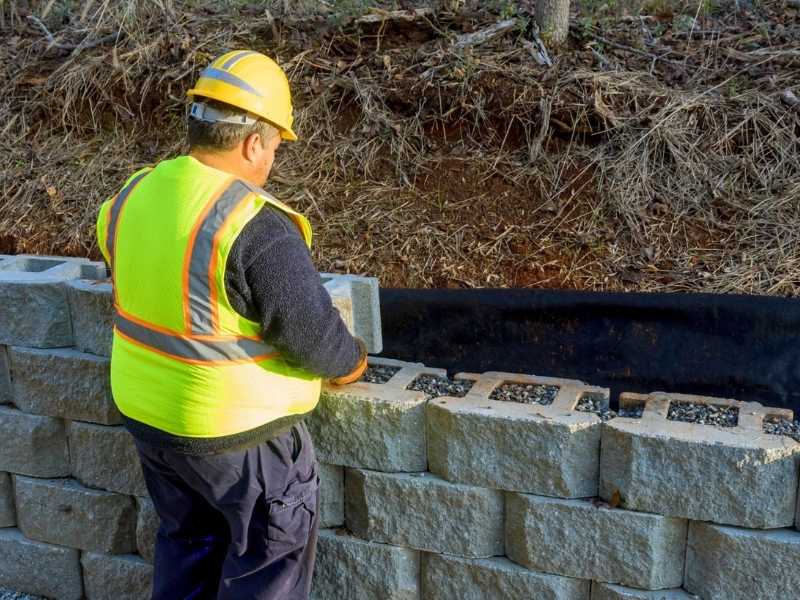
Masonry contractor installing a stone retaining wall with block courses and drainage preparation on a sloped landscape

Retaining walls look simple. Stack some brick or stone and the hill stays put.

That’s not how it works. Walls built without proper planning fail. Some lean. Some crack. Some collapse outright, taking soil and landscaping with them. A masonry professional can spot drainage and soil issues before they become expensive problems.

The fix after the fact always costs more than doing it right the first time.

Before this project starts, here’s what you need to know.

What a Retaining Wall Actually Does

A retaining wall holds back soil. That sounds straightforward, but the forces involved are serious.

The soil is heavy. Wet soil is heavier. When rain soaks into the ground behind a wall, the pressure on that wall multiplies. The wall has to resist that pressure constantly, not just on dry days.

Water management is part of the job too. Trapped water behind a wall is one of the most common causes of failure. A wall built without proper drainage doesn’t just struggle over time. It loses.

When You Need a Permit

Most local governments require a building permit for retaining walls over a certain height. In many areas, that threshold is three to four feet.

The International Residential Code (IRC) generally requires engineered drawings for walls over four feet, measured from the bottom of the footing to the top of the wall. That means a licensed structural professional needs to sign off before any ground gets broken.

Don’t assume a shorter wall skips the permit process. Check with your local building department first. Getting caught without a required permit means stopping work, applying retroactively and possibly tearing down what’s already built.

The Drainage Problem Most Homeowners Ignore

Poor drainage is the number one cause of retaining wall failure. Full stop.

When water can’t escape, it builds up behind the wall. That pressure pushes outward. Even a well-built wall struggles against constant water pressure over time.

Every retaining wall needs a drainage plan. That includes:

  • Gravel backfill directly behind the wall to let water move through
  • A perforated drain pipe at the base of the wall to carry water away
  • Weep holes at regular intervals in the wall face to release pressure
  • Proper grading behind the wall to direct surface runoff away from the base

Skipping any one of these puts the wall at risk. A mason who doesn’t bring up drainage during planning is a red flag.

Footing and Foundation Requirements

A retaining wall needs a concrete footing buried below the frost line. This base anchors the wall and spreads the load into stable soil.

Footing depth depends on local frost depth, soil type and wall height. In climates where the ground freezes in winter, a footing that doesn’t go deep enough will heave and shift with the freeze-thaw cycle. That movement cracks mortar joints and destabilizes the whole structure.

For mortared brick or stone walls, the footing is not optional. Dry-stacked walls have more flexibility, but taller dry-stacked walls still need a stable, compacted base to hold up over time.

Brick vs. Stone for Retaining Walls

Both materials work, but they perform differently depending on the wall’s height and setting.

Brick

Brick retaining walls work best for lower applications, typically under four feet. They suit formal garden settings, walkway borders and low landscape edges.

Brick walls require mortar for structural use. The consistent size makes them easier to lay in level courses, but mortar is less forgiving of soil movement than stone. If the footing shifts, the joints crack.

Brick also absorbs more moisture than dense stone. In areas with heavy rainfall or freeze-thaw cycles, this speeds up deterioration if the wall isn’t properly sealed and maintained.

Stone

Natural stone is a stronger choice for taller retaining walls, especially when dry-stacked. The irregular shapes interlock and the weight of the stone adds stability.

Dry-stacked stone walls flex slightly with soil movement without cracking. They also drain naturally through the gaps between stones, which reduces water pressure behind the wall.

Mortared stone walls give a cleaner finished look but require the same footing and drainage considerations as brick.

For walls over four feet or on steep ground, natural stone handled by an experienced mason is the more reliable choice.

Height Limits and What They Mean

Wall height affects everything: permit requirements, engineering needs, footing depth and material selection.

Walls under two feet are the most straightforward to build. Walls between two and four feet need proper footings and drainage. Walls over four feet almost always require a structural engineer’s input and a building permit.

Walls over six feet are serious structural projects. They require engineered designs, deep footings and in many cases reinforcement within the wall itself. That’s not a DIY project, regardless of how skilled the homeowner is.

Warning Signs a Retaining Wall Is Failing

Failures rarely happen without warning. Watch for these signs:

  • Leaning or bowing in the wall face
  • Horizontal cracks running across multiple courses
  • Bulging at the base or middle of the wall
  • Soil washing out from behind the wall after rain
  • White mineral deposits on the face, which indicate water moving through the wall

A wall showing any of these signs needs professional assessment. Waiting makes the repair more expensive. In some cases a failing wall can be reinforced. In others it has to come down and get rebuilt from scratch.

Frequently Asked Questions

Do I need an engineer for a retaining wall?

For walls under four feet, an engineer is often not required, but local rules vary. For walls over four feet measured from the bottom of the footing, most jurisdictions require engineered drawings before issuing a permit. Confirm with your local building department before starting. The cost of an engineering review is far less than a wall that fails inspection or comes down.

Can I build a brick or stone retaining wall myself?

Low dry-stacked stone walls under two feet can be a manageable DIY project with the right preparation. Mortared brick or stone walls require masonry skills, footing work and drainage installation. Walls over three feet should be handled by a professional mason. The structural and drainage requirements at that height go beyond what most homeowners can safely manage on their own.

How long does a properly built retaining wall last?

A well-built masonry retaining wall with proper drainage and footings can last 50 years or more. Walls that fail early almost always have drainage problems, shallow footings or both. Material quality matters, but proper construction technique matters more.

What is the best material for a retaining wall in wet or rainy conditions?

Natural stone, especially dry-stacked, handles wet conditions well because water drains naturally through the wall. Mortared walls of any material need weep holes and gravel backfill to manage water. In very wet conditions, a perforated drain pipe at the base is standard practice regardless of which material is used.

How much does a brick or stone retaining wall cost?

Costs vary by wall height, length, site conditions and material. Brick retaining walls typically run $25 to $50 per square face foot installed. Natural stone walls range from $25 to $75 or more per square face foot. Taller walls with engineering requirements and drainage systems cost more. Get at least two written quotes from licensed masons before committing to any contractor.

Posted in Brick | Tagged brick masonry

Mistakes Homeowners Make When Planning an Outdoor Fireplace

Madison Brick & Stone Posted on May 25, 2026 by madisonBSMay 22, 2026
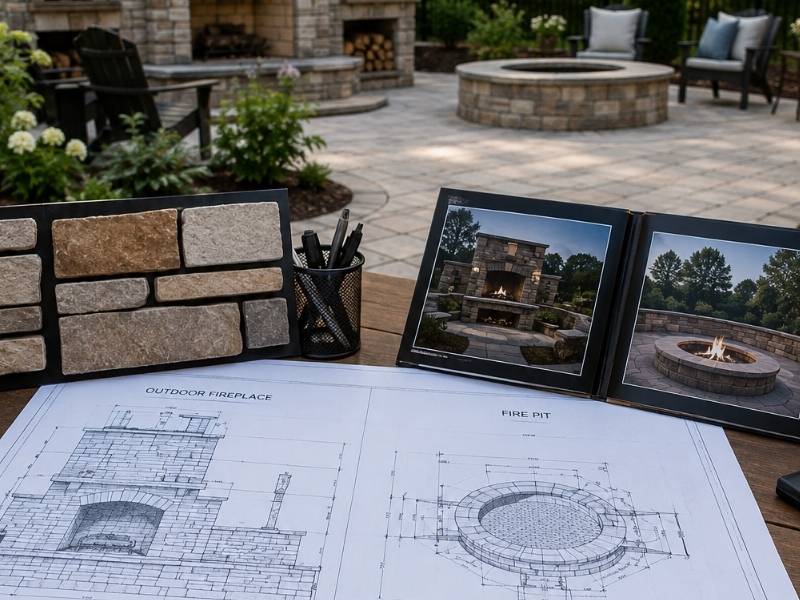
Outdoor fireplace planning layout with stone samples, design plans, and a completed backyard masonry fireplace and fire pit area

Most homeowners spend weeks choosing the right look for their outdoor fireplace. They pick out stone samples, browse photos and debate finishes. Few spend even an hour asking whether they’re actually allowed to build one.

That’s the real problem. The planning phase is where most outdoor fireplace projects go wrong, and by the time the mistakes show up, the structure is already built.

Catching these mistakes before construction starts is much cheaper than fixing them after.

Skipping the Permit Process

This is the most common mistake. It’s also the most expensive one to fix after the fact.

Most local governments require a permit for any permanent outdoor fireplace. Build without one and you risk fines, failed inspections or being forced to tear the whole thing down. Some homeowners also find that their HOA has separate restrictions on top of local building codes.

The permit process isn’t just red tape. It tells you what materials are allowed, how far the fireplace needs to sit from property lines and neighboring structures and what fuel types are approved in your area.

What to Do Before You Break Ground

Before you buy materials or hire anyone, find out what’s required. An outdoor fireplace builder can help you sort through local permit requirements before work begins. 

Putting the Fireplace in the Wrong Place

Location affects more than how the fireplace looks. It affects how safe it is and whether you’ll actually enjoy using it.

Smoke follows the wind. If you place the fireplace where wind blows toward the house or the seating area, every fire becomes a smoke problem. Low spots in the yard trap smoke instead of letting it rise. Corners near fences block airflow and make the same issue worse.

Placement too close to wooden fences, overhanging trees or the house itself creates a fire risk that no amount of good construction can fix.

How to Find the Right Spot

Spend time in the yard at different times of day before deciding on a location. Watch how the wind moves through space. Most local codes require at least 10 feet of clearance from any structure, but confirm that distance with your local building department since requirements vary.

Using the Wrong Materials for Outdoor Use

What holds up inside a home doesn’t always survive outside. Standard brick and mortar absorb water. In climates with cold winters, that water freezes, expands and cracks the masonry from the inside out.

Some decorative stones look great but aren’t rated for direct heat exposure. Metal components that aren’t finished for outdoor use will rust within a season or two. Using indoor fireplace components outside voids warranties and creates real safety concerns.

The firebox and surrounding structure need materials built for both heat and weather. Refractory mortar is rated for temperatures up to 2,000 degrees Fahrenheit. Standard mortar isn’t even close to that range.

Ignoring Foundation Requirements

A full masonry outdoor fireplace can weigh several thousand pounds. Most homeowners don’t account for that.

An existing patio slab isn’t designed to carry that load. Without a proper foundation, the fireplace will shift as the ground moves with moisture and temperature changes. Cracks follow. Then structural failure.

What a Proper Foundation Looks Like

The standard is a reinforced concrete footing, typically 6 to 8 inches thick, poured separately from the existing patio slab. The soil beneath it also matters. Clay-heavy soil expands and contracts with moisture. A professional needs to assess load-bearing capacity before anything gets built on top of it.

Skipping this step is the most common reason outdoor fireplaces crack within the first few years.

Getting the Chimney Height Wrong

A chimney that’s too short pushes smoke back down into the seating area. Most homeowners don’t figure this out until the first fire of the season.

The standard rule is that the chimney should sit at least 2 feet above anything within 10 horizontal feet of the structure. That includes rooflines, pergolas and tree canopies.

A flue that’s sized incorrectly, either too wide or too narrow, affects how well the chimney draws smoke up and away. No flue liner in a masonry chimney is a fire risk. A chimney cap keeps out rain, debris and animals and is not optional for an outdoor build.

Underestimating the Full Cost

Early estimates tend to leave things out. Permit fees, foundation work and site preparation are often missing from the first quote a homeowner receives. Add-ons like a gas line, outdoor lighting or a surrounding patio extension add up fast.

Ongoing costs matter too. Mortar joints need attention over time. The chimney needs cleaning. These aren’t huge expenses on their own, but homeowners who don’t plan for them are usually surprised when they arrive.

Forgetting About Maintenance Access

A fireplace that’s hard to clean tends to get ignored. An ignored fireplace becomes a safety problem.

Ash cleanout doors and chimney access panels should be part of the design from the start, not added later. Decisions made during the planning phase directly affect how easy or difficult maintenance becomes over the next 20 years.

Frequently Asked Questions

Do I need a permit to build an outdoor fireplace?

In most areas, yes. Permanent outdoor structures typically require a building permit. Rules vary by location, so check with your local building department before starting any work.

How far does an outdoor fireplace need to be from my house? 

Most local codes require at least 10 feet from any structure. Some areas require more. Confirm the exact distance with your local building department before choosing a spot.

Can I build an outdoor fireplace on an existing patio? 

It depends on the slab’s thickness and condition. Most existing patios aren’t built to support the weight of a masonry fireplace. A professional should assess the foundation before you commit to a location.

What materials work best for an outdoor fireplace? 

Fire-rated brick and refractory mortar are the standard choice for heat resistance and durability. The right materials also depend on your local climate and how the fireplace will be used through the seasons.

How often does an outdoor fireplace need maintenance?

A wood-burning fireplace should be inspected once a year. Check the mortar joints, chimney cap and firebox for cracks or wear after each winter season.

Posted in Brick | Tagged brick masonry, stone masonry

Post navigation

← Older posts
Newer posts →

© Copyright Madison Brick & Stone
Madison, Alabama ​35758
Phone: (256) 270-2702

Privacy Policy | Terms of Use

Web Development and SEO by: AuburnBusiness.com

The owner of this website, AuburnBusiness, LLC, provides marketing for local skilled labor businesses in the Huntsville and Madison, AL area.

↑