
↓
 

Madison Brick & Stone

Brick & Stone Masons in Madison, AL

Madison Brick & Stone
  • Home
  • Brick Masonry
  • Stone Masonry
  • Indoor Fireplaces
  • Outdoor Fireplace
Home→Tags brick masonry 1 2 3 4 5 >>

Tag Archives: brick masonry

Post navigation

← Older posts

Brick Masonry Repairs Sellers Should Handle Before Listing a Home

Madison Brick & Stone Posted on June 25, 2026 by madisonBSJune 24, 2026
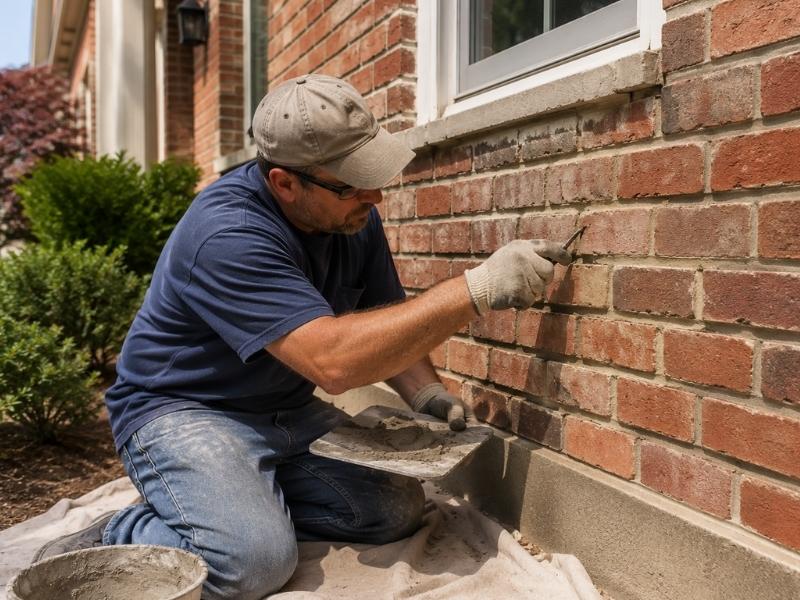
Mason repointing deteriorated brick mortar joints on a residential home before listing the property for sale

A home inspector walking a property in Madison will look at the brick the same way a buyer does: carefully and with fresh eyes. Cracked mortar, spalling brick and leaning sections don’t just look bad in listing photos. They show up in inspection reports, trigger buyer negotiations and sometimes kill deals. Brick masonry problems that seem minor to a seller who’s lived with them for years can become major bargaining chips for a buyer looking for any reason to lower an offer. Fixing the right issues before listing protects the sale price and keeps the transaction on track.

Why Brick Condition Affects More Than Curb Appeal

Brick homes have a reputation for being solid and low-maintenance. That reputation works in a seller’s favor, but only if the brick actually looks the part.

A buyer who sees cracked mortar and stained brick doesn’t think low maintenance. They think deferred maintenance. They start wondering what else has been ignored. That shift in perception affects more than the price they offer. It affects how seriously they take every other item on the inspection report.

In Madison, where brick construction is common across established neighborhoods, buyers have options. A home with visible masonry problems competing against a similar home with clean brick is at a disadvantage before the first showing ends.

Deteriorating Mortar Joints

This is the most common masonry issue found on homes listed for sale, and the most overlooked.

Mortar joints don’t last forever. On older homes, they’ve often reached the end of their life. Mortar that’s cracked, recessed or crumbling no longer seals the gaps between bricks. Water gets in. In Madison’s climate, that leads to staining, interior moisture problems and faster brick damage.

A home inspector will note deteriorated mortar. A buyer’s agent will use it in negotiations. Repointing the affected joints before listing removes that talking point.

The repair involves grinding out old mortar to a consistent depth and packing in new mortar that matches the original in color and type. This costs far less than the leverage a buyer gains when an inspection report flags the problem.

One caution: don’t use a mortar that’s harder than the original brick. Harder mortar causes brick faces to chip over time. A mason who has worked on older homes will know the right mix.

Cracks in the Brick or Mortar

Not all cracks are the same. Sellers should understand the difference before deciding what to fix.

Hairline cracks in mortar joints are usually cosmetic. Repointing handles them without concern. Stair-step cracks that run diagonally through the mortar joints are a different matter. These can signal foundation movement or settling. An inspector will flag them. A structural engineer may be called in.

Horizontal cracks, especially on a basement wall, are the most serious type. They can signal lateral pressure on the wall. These need professional evaluation before listing, not a patch job that hides the problem.

For cosmetic cracks, repair before listing. For cracks that may be structural, get an evaluation and follow the engineer’s recommendation. Listing a home with known structural cracking and hoping no one notices is a losing strategy.

Spalling Brick Faces

Spalling happens when the face of a brick flakes or pops off. Water soaks into the brick, freezes and expands, breaking off the surface layer.

Spalled bricks are both a visual and a functional problem. Once the face is gone, the brick absorbs water faster and the damage spreads. On a listing, spalled brick looks like neglect even when the rest of the home is clean and well-kept.

Individual spalled bricks can be replaced. A mason removes the damaged unit, sets a matching replacement and repoints the surrounding joints. Getting a good color match on older brick is the difficult part. A skilled mason will look for salvaged brick or use weathering methods to reduce the visual gap.

Wide-spread spalling across a large section of wall is a larger project and a more serious conversation about the home’s overall condition.

Chimney Masonry Problems

Chimneys take more weather damage than any other part of a brick home. They sit exposed at the top of the roof with no overhangs to protect them.

Common problems include cracked mortar joints, spalling bricks, a damaged crown and failed flashing at the roofline. A home inspector will examine the chimney closely, often using binoculars or a camera. Anything found there goes in the report.

Repointing the chimney’s mortar joints is a manageable repair. Replacing a cracked crown keeps water from running down into the chimney structure. These repairs cost a reasonable amount upfront and prevent larger price conversations during buyer negotiations.

Efflorescence and Surface Staining

White chalky deposits on brick are called efflorescence. Water carries salts through the masonry and leaves them on the surface as it dries. It’s not a structural problem, but it looks like one in listing photos and raises questions about moisture.

Efflorescence can be cleaned with a diluted acid wash or a masonry-specific cleaner. Cleaning before listing photos are taken costs little and removes a distraction that buyers notice right away.

Dark staining from algae, mildew or water marks can also be cleaned before listing. Clean brick photographs better and creates a stronger first impression than brick with years of surface buildup.

Frequently Asked Questions

What brick masonry repairs matter most before listing a home?

Mortar joint deterioration, cracked or spalled bricks, and chimney masonry problems show up most often in inspection reports. Fixing these before listing removes negotiating leverage from buyers and helps protect the asking price.

How much does repointing brick mortar cost before a home sale?

Cost varies based on the area affected and the home’s size. A typical repair for moderate joint deterioration can range from several hundred to a few thousand dollars. That is often less than the price reduction a buyer may negotiate when an inspection report identifies masonry issues.

Can cracked brick mortar be left until after the sale?

Leaving visible mortar cracks shifts the repair cost to the buyer, but it also shifts negotiating power to the buyer. Sellers who address obvious masonry issues before listing often achieve better outcomes because buyers frequently use inspection findings to negotiate lower prices.

What is efflorescence and should it be cleaned before listing?

Efflorescence is a white mineral deposit left on brick surfaces when moisture evaporates through the masonry. While it is usually not a structural concern, it can make a home appear to have moisture problems. Cleaning it before listing is a simple way to improve curb appeal and presentation.

When should a seller involve a structural engineer in brick masonry issues?

Stair-step cracks running diagonally through mortar joints or horizontal cracks along basement walls should be evaluated by a structural engineer before listing. These patterns may indicate foundation movement or excessive wall pressure. Addressing only the visible damage without resolving the cause can create disclosure concerns and potential liability.
Posted in Brick Mason | Tagged brick mason, brick masonry, brick masonry problems

Brick Masonry Problems That Start Around Window Sills

Madison Brick & Stone Posted on June 24, 2026 by madisonBSJune 24, 2026
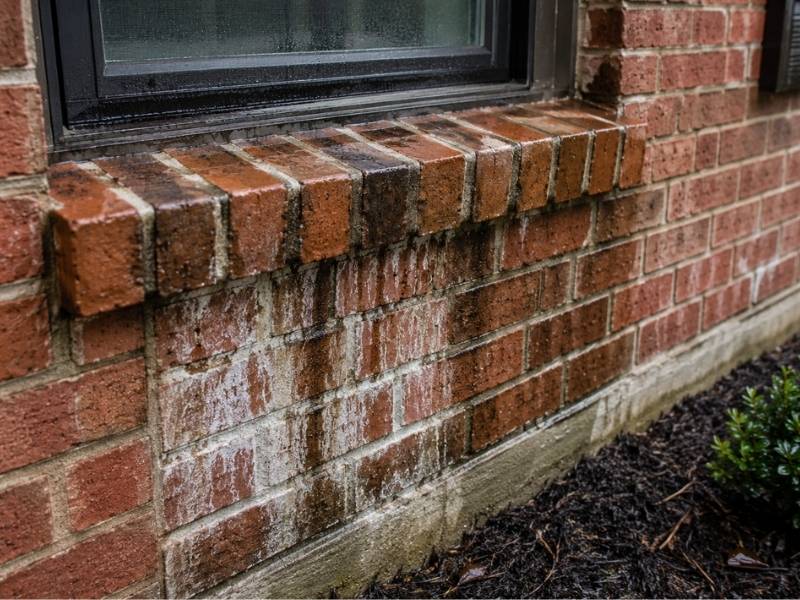
Brick window sill showing moisture staining and water damage caused by poor drainage and improper flashing details

Walk a finished brick wall and the window sills are where the first leaks show up. The sill is the one ledge on the wall that catches water and holds it. Rain runs down the glass, hits the sill and sits there. That’s why so many brick masonry problems start at the sill and spread into the wall below. For developers, the good news is that almost all of it traces back to a few install details you control. Get the sill right and you skip the callbacks.

Why the Sill Is the First Place Water Wins

A window sill is a horizontal shelf. Every other part of a brick wall is vertical, so water runs off it. The sill is the exception. It collects the water that sheets down the window and the wall above.

Most brick sills are built as a rowlock, which is a row of bricks stood on edge and tilted. That look is fine, but it means the sill is a line of separate bricks with mortar joints between each one. Those joints are the weak point. Water works through them, and once it’s under the sill, it’s inside the wall, not outside. The sill also sits right over the wall below, so anything that leaks through drains straight into the part of the wall you most want to keep dry.

The Three Build Mistakes That Cause It

Most sill trouble comes down to three details that get skipped or rushed during the build. None of them are hard. All of them are easy to miss.

The sill has no slope

A sill is supposed to tilt water away from the building. The Brick Industry Association says a brick sill should slope at least 15 degrees down and away, and stick out at least an inch past the face of the wall. A flat or barely tilted sill does the opposite. Water pools on it, sits in the joints and soaks in. That standing water is what starts the damage.

There’s no drip under the front edge

Water is sneaky. When it runs off the front of a sill, it can curl back along the underside and crawl right back to the wall. A drip stops that. On a sloped brick sill the drip is just the lower front corner, set out at least an inch from the wall face. Skip it and the water you thought you shed comes straight back into the brick.

The flashing and end dams are wrong or missing

Behind the sill sits a layer of flashing. Its job is to catch any water that gets through and send it back outside. For it to work, the ends have to turn up at least an inch to form end dams. Those dams stop water from running off the sides of the flashing and into the wall. Miss them and the flashing funnels water into the exact place you’re trying to protect. This one hides. Once the brick is laid, nobody can see whether the end dams are there.

The Window Joint Nobody Re-Checks

There’s a seam between the window frame and the brick. That seam gets filled with sealant, and sealant doesn’t last forever. It dries out, shrinks and cracks on a schedule. Once it splits, water runs behind the sill and into the wall.

A second layer helps here. A pan flashing set under the window catches water that sneaks past the frame or the joint and drains it back out onto the sill. The sealant joint should also stay clear of mortar for the full depth of the brick, so water has a clean path out instead of getting trapped. Builders who add the pan flashing stop a leak that would otherwise show up years later as a stain on the inside wall.

What to Check Before the Brick Closes In

This is the part that saves you money. Every fix above happens before the wall is finished. Once the brick is up, none of it is visible, and none of it is cheap to correct.

  • Confirm the sill slopes at least 15 degrees and projects at least an inch past the wall face.
  • Check that a drip sits under the front edge, set back at least an inch from the wall.
  • Make sure the sill flashing runs past both sides of the window and turns up at least an inch at each end to form end dams.
  • Add a pan flashing under the window to catch leaks from the frame or the joint.
  • Keep the sealant joint clean, full depth and free of mortar.

Five checks. A few minutes each. They decide whether the wall stays dry for thirty years or leaks in three.

Why This Falls on the Builder

Sill leaks are quiet at first. The wall looks perfect at closing. The flashing and end dams are buried where no inspector and no buyer will ever see them. Two or three years later a damp stain shows up on the inside wall, or the brick under the sill starts to flake, and now it’s a warranty call.

Fixing a bad sill means pulling brick, replacing flashing and rebuilding the detail. That costs real money, and it lands on whoever built it. Doing it right the first time costs minutes at install. The sill is a small piece of the wall, but it’s the one that decides how dry the rest of it stays.

Frequently Asked Questions

Why do window sills leak before the rest of a brick wall?

The sill is the only horizontal surface on the wall, so it catches and holds water instead of shedding it. Most sills are also built from separate bricks with mortar joints that water can work through. That combination makes the sill the first spot to leak.

How much should a brick window sill slope?

A brick sill should slope at least 15 degrees down and away from the building. It should also stick out at least an inch past the wall face so water drips clear. A flat sill holds water and lets it soak into the joints.

What are end dams and why do they matter?

End dams are the upturned ends of the flashing under a sill, bent up at least an inch. They stop water from running off the sides of the flashing and into the wall. Without them, the flashing sends water into the brick instead of out of it.

Can a sill leak even if the brick looks fine?

Yes. The parts that fail, the flashing and end dams, are hidden inside the wall. A sill can look perfect from outside while water runs in behind it. The damage shows up later as an inside stain or flaking brick under the sill.

How often should the sealant around a window be checked?

Sealant has a limited life and cracks as it ages, so check it every few years and after hard weather. Cracked or missing sealant lets water slip behind the sill. Resealing early is cheap next to repairing a wet wall.

Posted in Brick Mason | Tagged brick mason, brick masonry, brick masonry problems, masonry contractor

Why Weep Holes Matter More Than Most Homeowners Realize

Madison Brick & Stone Posted on June 19, 2026 by madisonBSJune 16, 2026
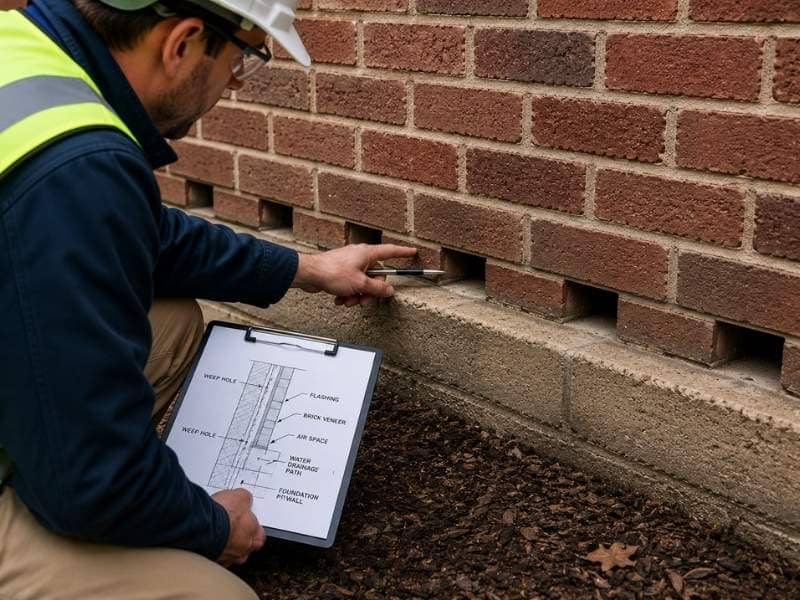
Engineer checking weep holes at the base of a brick wall to ensure proper water drainage.

Brick walls look solid. That’s the whole point. But weep holes tell a different story. These small openings, spaced along the bottom row of bricks, do something the wall can’t do on its own. They let water out. And if you’ve never noticed them before, you’re not alone. Most homeowners walk past them every day without a second thought.

That’s worth changing.

What Are Weep Holes and What Do They Do?

Brick walls are not waterproof. Rain pushes through small gaps in the mortar. Water vapor from inside the house moves through the wall and collects in the air space behind the brick. That gap exists by design. It gives the wall room to breathe. But when moisture builds up in that space with no way out, problems follow.

Weep holes sit at the base of the brick layer, right above the flashing. Gravity does the rest. Water drains down, reaches the opening, and exits the wall. The system is simple, but it only works when those openings stay clear.

According to the Brick Industry Association, weep holes should be spaced no more than 33 inches apart along the base course to provide adequate drainage across the full wall.

How Trapped Moisture Damages Brick Walls

When moisture has no way to exit the wall cavity, it soaks into mortar joints, expands during freezing temperatures, and creates conditions where mold can grow. Each of these problems gets worse over time and costs more to fix the longer it goes unaddressed.

Here’s what that leads to:

  • Mortar breakdown. Water soaks into joints and softens the bond between bricks. A hairline gap turns into a crumbling joint. That crumbling joint lets in more water, which widens the damage further.
  • Brick cracking and spalling. Trapped moisture freezes in cold weather. Ice expands. That expansion pushes outward against the face of the brick until it cracks or breaks off in pieces. The Portland Cement Association notes that freeze-thaw damage accounts for more than 25% of masonry repair calls in cold climates.
  • Mold inside the wall. A wet wall cavity is exactly where mold grows. The EPA reports that mold can begin developing on wet building materials within 24 to 48 hours. By the time it becomes visible or noticeable, it has usually already spread across the framing behind the brick.

None of these problems announce themselves early. That’s what makes proper drainage so important.

What Blocked or Missing Weep Holes Look Like From the Outside

The most visible signs of drainage failure in brick masonry are white staining on the brick surface, soft or sandy mortar at the base of the wall, cracks along mortar joints near corners or windows, and damp interior walls after rain.

You don’t need to open up a wall to know something is wrong. Most drainage problems leave marks on the surface.

White staining is usually the first sign. That chalky residue, called efflorescence, forms when water moves through the masonry and carries dissolved salts to the surface. It wipes off, but it keeps coming back until the underlying drainage problem gets fixed.

Soft mortar at the base is another signal. Run a finger along the mortar joint. If it feels sandy or crumbles under light pressure, water has been sitting there long enough to break it down.

Cracks near corners and window frames tend to show up where water concentrates. Brick faces that start to chip or flake at the edges are showing early freeze-thaw damage.

Inside the house, moisture stains on drywall near exterior walls, or a damp feeling along the base of an exterior room after heavy rain, can trace back to a drainage issue outside.

One sign on its own doesn’t always point to weep holes. Two or more together usually do.

How to Keep Weep Holes Clear

Inspect weep holes twice a year and after major storms. Clear debris with a thin wire or small brush. Keep mulch and soil below the openings. Check the flashing condition above windows and doors. Use mesh inserts to block pests without sealing the drainage path.

Here’s what that inspection looks like in practice:

  • Find the openings. Weep holes sit along the first or second row of bricks above grade. They also appear above windows and doors. They look like short gaps where mortar was left out between bricks.
  • Clear any blockage. A thin wire or a small brush is enough. The goal is to open the passage so water can move through freely. Don’t force anything deep into the wall.
  • Check the area around the base. Mulch, soil, and landscaping materials piled against the wall can cover weep holes entirely. Keep the base of the wall clear, with at least a few inches of separation between the soil line and the openings.
  • Look at the flashing. Weep holes work as part of a system. If the flashing above windows or at the base of the wall is damaged, water doesn’t reach the openings the way it should. Damaged flashing needs repair, not just a cleared weep hole.
  • Use mesh inserts if needed. Insects sometimes nest inside weep holes. Mesh inserts solve that problem without blocking drainage. Never seal the openings with caulk or mortar.

Frequently Asked Questions

What is the difference between a weep hole and a vent in brick masonry?

Weep holes and vents both appear in the brick base course, but they serve different purposes. Weep holes drain liquid water out of the wall cavity. Vents allow air to circulate through the cavity and help the wall dry faster after rain or condensation. Some installations include both. Others rely on weep holes alone to handle both functions.

Do newer homes have weep holes?

Most homes built after modern masonry standards became common include weep holes, but not all. Some older construction omitted them entirely. Others had them sealed during remodels by contractors unfamiliar with their purpose. The only way to know for certain is to inspect the base course of the brick wall.

Can insects get into the house through weep holes?

Weep holes are small, but some insects can enter through them. Mesh inserts designed for brick masonry are the standard solution. They allow water and air to move freely while blocking most pests. They’re available at most hardware stores and easy to install without professional help.

Is efflorescence a sign of a serious problem?

Efflorescence by itself is not structural damage. It’s a mineral deposit left behind as water evaporates from the surface. But it does indicate that water is moving through the masonry in a way it shouldn’t. Recurring efflorescence, especially along the base of a wall, usually points to a drainage issue that benefits from a closer look.

Posted in Brick Mason | Tagged brick masonry

Post navigation

← Older posts

© Copyright Madison Brick & Stone
Madison, Alabama ​35758
Phone: (256) 270-2702

Privacy Policy | Terms of Use

Web Development and SEO by: AuburnBusiness.com

The owner of this website, AuburnBusiness, LLC, provides marketing for local skilled labor businesses in the Huntsville and Madison, AL area.

↑