Brick Repair vs. Brick Replacement: How to Know Which You Need
Brick repair is often the first thing homeowners ask about when they spot damage on a wall, step, or column. Not every situation calls for the same solution though. A small crack near a window is a different job than brick wall repair on a section that’s been taking water damage for years. Choosing the wrong approach costs more in the long run, and patching deep damage only delays a bigger problem.
Here’s how to tell the difference before you call anyone.
What Separates Repair from Replacement
The short answer: depth of damage and structural involvement.
Repair works when the brick itself is still solid. If the problem is limited to the mortar joints, a small crack, or minor surface wear, a mason can fix it without touching the brick at all.
Replacement becomes necessary when the brick has broken down structurally. Crumbling faces, deep fractures that run through the full thickness of the brick, or water damage that has compromised the core all point toward pulling the brick out and putting in new material.
One damaged brick in a wall doesn’t mean the whole section needs to come out. Ten damaged bricks in the same area, all showing the same pattern of failure, is a different situation.
When Brick Repair Is the Right Call
The Damage Is in the Mortar, Not the Brick
Mortar wears out faster than brick. A brick wall can last well over 100 years, but the mortar holding it together typically needs attention every 25 to 30 years. If the joints are crumbling, recessed, or cracking while the bricks themselves feel solid and show no surface flaking, repair is the right move.
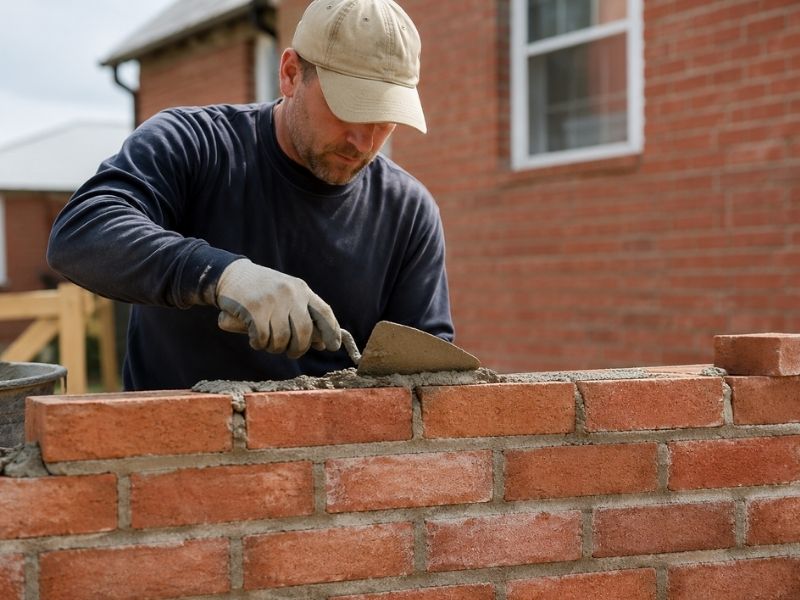
A mason will cut out the damaged mortar to a depth of about 3/4 inch and pack fresh mortar in. The brick stays. The wall stays. The repair is done in a day on most residential jobs.
You’re Dealing with Hairline or Isolated Cracks
Small cracks that haven’t moved or grown are usually repairable. A mason will clean the crack, fill it with the right mortar mix, and seal it. The key word is “isolated.” One crack near a window corner is a repair job. The same crack showing up in six places along the same wall is a pattern worth investigating before touching anything.
Surface Spalling Is Caught Early
Spalling is when the face of a brick starts flaking or popping off. In early stages, where only the surface layer is affected and the brick core is still intact, damaged bricks can sometimes be replaced individually without disturbing the surrounding wall.
Brick repair costs for spalling run between $1,000 and $3,500 for sections up to 100 square feet. Catching it early keeps the job on the lower end of that range.
When Brick Replacement Is the Right Call
The Brick Has Failed All the Way Through
A brick that crumbles when you press it, snaps cleanly across its full width, or shows deep fractures on multiple faces has failed structurally. Filling the surface won’t help. The brick needs to come out.
This matters most in load-bearing walls and columns where every unit carries weight. A structurally compromised brick in that context isn’t a cosmetic problem.
Water Got Inside and Stayed There
Freeze-thaw damage is the most common reason bricks fail in climates with cold winters. Water enters through a crack or worn mortar joint, sits inside the brick, freezes, expands, and breaks the brick apart from the inside. You’ll see it as deep pitting, missing chunks, or bricks that look like they’ve been chewed from the inside out.
Repairing the mortar around a freeze-damaged brick doesn’t fix the brick. It has to come out.
Large Sections Are Moving or Bowing
A wall section that’s visibly bowing outward or has shifted from its original plane isn’t a repair job. Something structural is driving that movement, whether it’s water pressure behind the wall, failing wall ties, or foundation issues. Patching bricks on a moving wall is a waste of money until the cause gets sorted out.
Bowing brick wall repairs run between $2,000 and $6,500 per 100 square feet depending on the repair method and cause.
The Gray Area: When It Could Go Either Way
Some situations aren’t obvious. A wall with moderate spalling across a large area might be repaired in sections or replaced entirely depending on how far the damage has progressed and how well the surrounding bricks are holding up.
A mason will do a tap test. Solid bricks produce a clear ring. A hollow or dull sound means the brick face has separated from the core, and that brick is a replacement candidate even if it looks fine on the surface.
Age matters too. Bricks made before the 1920s are often softer than modern brick and respond differently to repair attempts. Using the wrong mortar strength on old soft brick can actually cause more damage than the original problem. A mason experienced with older masonry will know how to match the mortar to the material.
How a Mason Makes the Call
A good mason won’t quote repair or replacement over the phone without seeing the wall. The inspection involves:
- Checking mortar joint depth and condition
- Pressing and tapping individual bricks to test core integrity
- Looking for patterns in where the damage appears
- Checking for moisture sources nearby (gutters, grading, pooling water)
- Assessing whether the damage is isolated or systemic
That last point matters more than most homeowners expect. Damage that keeps appearing in the same spot after repairs usually has a moisture source driving it. Fixing the brick without fixing the water problem means the same repair comes back in three years.
Frequently Asked Questions
Can you repair just one or two damaged bricks?
Yes. Individual brick replacement is standard masonry work. A mason cuts out the damaged brick, cleans the cavity, and sets a matching replacement unit with fresh mortar. The tricky part is sourcing brick that matches the original in color and texture, especially in older homes.
How long does brick repair last?
A properly done repair with the right mortar mix lasts 20 to 30 years in most conditions. Repairs that fail early usually used the wrong mortar type or didn’t address the moisture source causing the original damage.
Is brick replacement more expensive than repair?
Usually yes, but not always by as much as homeowners expect on small sections. Replacing five badly damaged bricks may cost similar to repointing a large section of mortar joints. Get a quote for both if your mason says either option applies to your situation.
What causes bricks to fail faster in some areas of a wall than others?
Usually moisture. Areas near downspouts, ground level, or sections with poor drainage take more water exposure and fail sooner. North-facing walls that stay damp longer after rain also tend to show damage earlier than south-facing walls.
Do I need a permit for brick repair or replacement?
For most standard repair and replacement work, no permit is required. Structural repairs to load-bearing walls may require one depending on local building codes. Your mason should know the local requirements and flag it before work starts.
