↓
 

Madison Brick & Stone

Brick & Stone Masons in Madison, AL

Madison Brick & Stone
  • Home
  • Brick Masonry
  • Stone Masonry
  • Indoor Fireplaces
  • Outdoor Fireplace
Home→Tags brick masonry problems - Page 3 << 1 2 3

Tag Archives: brick masonry problems

Post navigation

Newer posts →

Brick Mailbox Leaning? Here’s Why

Madison Brick & Stone Posted on June 2, 2026 by madisonBSMay 27, 2026
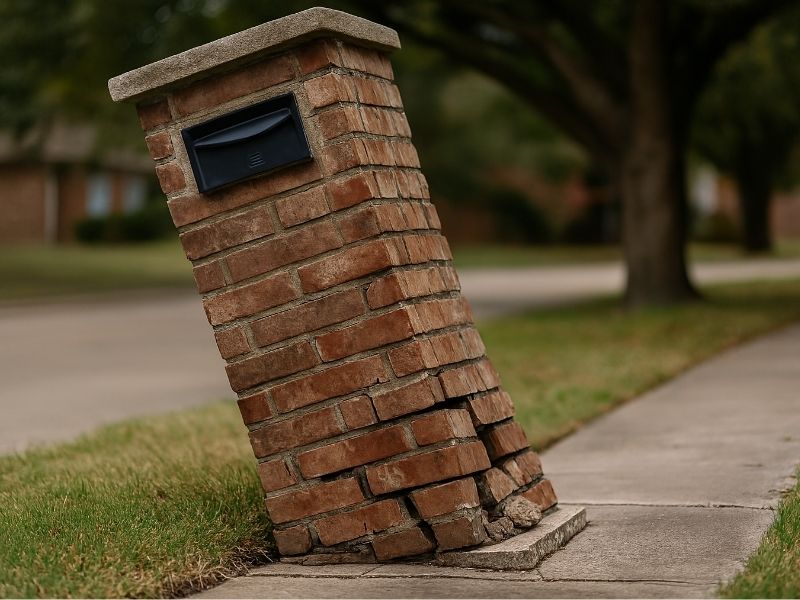
Leaning brick mailbox with visible foundation movement and shifting bricks near a residential sidewalk

A brick mailbox usually looks solid. It feels permanent. Most homeowners expect it to stay straight for years. Then one day, something looks off. The mailbox tilts a little. Months later, the lean gets worse.

Small movements often start long before people notice it.

A leaning brick mailbox rarely happens by chance. Water, soil movement, weak support, and poor installation often play a part. Finding the cause early can stop larger repairs later.

What Causes a Brick Mailbox to Lean?

Brick structures are heavy. That weight pushes down on the base every day.

If the support under the mailbox shifts, the structure above shifts too.

Common causes include:

  • Soil movement
  • Poor drainage
  • Weak foundations
  • Tree roots
  • Vehicle contact
  • Water damage

Some problems start below ground where homeowners cannot see them.

Soil Movement Can Slowly Push Things Out of Place

Soil expands and shrinks.

Rain adds moisture. Dry periods remove it. That cycle changes the ground over time.

A mailbox placed on unstable soil can begin to move little by little.

The shift may start small. A slight tilt often becomes larger with each season.

Signs of soil movement:

  • Small cracks near the bottom
  • Uneven gaps in mortar joints
  • A slight tilt that gets worse over time
  • Nearby ground that looks uneven

Ignoring movement early often leads to bigger repairs later.

Water Near the Base Creates Problems

Water causes trouble around masonry.

Poor drainage can soften soil near the base of a brick mailbox. Soft ground cannot support heavy weight well.

Water may come from:

  • Downspouts
  • Yard grading problems
  • Sprinklers
  • Standing water after rain

A wet area around the mailbox should not be ignored.

Repeated moisture weakens support below the structure.

Weak Foundations Create Long-Term Problems

A brick mailbox needs more than stacked bricks.

The foundation matters.

Some mailboxes sit on shallow bases. Others may not have enough support underneath. That becomes a problem once weight settles over time.

Poor foundations often show warning signs:

Cracks Near the Bottom

Lower cracks usually point to movement.

Hairline cracks can become wider over time.

Separation Around Mortar Joints

Mortar joints should stay tight.

Gaps may show that parts of the structure are shifting at different speeds.

Visible Leaning

People often notice the lean first.

By then, movement may have been happening for months.

Nearby Tree Roots Can Shift the Ground

Roots do more than grow under sidewalks.

Large roots can move soil and place pressure on nearby structures.

A tree planted years ago may not seem connected to a leaning mailbox. Underground growth tells a different story.

Watch for:

  • Trees close to the mailbox
  • Raised soil nearby
  • Cracks forming on one side only

Root pressure often pushes unevenly.

Small Vehicle Contact Happens More Than People Think

Mailboxes sit near roads.

Cars back up. Delivery trucks turn around. Lawn equipment gets close.

Some impacts happen hard. Others barely get noticed.

Repeated small bumps can loosen parts of a structure.

Check for:

  • Scrape marks
  • Brick chips
  • Damage near corners
  • Sudden changes in alignment

A mailbox does not need a major hit to move.

How to Spot Early Warning Signs

Waiting until a mailbox leans badly creates more work.

Look for small changes first.

Walk around the structure and check for:

  • Cracked mortar
  • Gaps between bricks
  • Uneven lines
  • Movement after heavy rain
  • Loose bricks

Small repairs usually cost less than rebuilding later.

What Homeowners Can Do Next

Do not ignore movement.

A leaning mailbox rarely straightens itself.

Check drainage first. Look around the base after rain. Watch for standing water or soft ground.

Take photos every few months. Changes become easier to spot.

If movement keeps getting worse, a masonry contractor can inspect the structure and check the support below. Reviewing residential masonry work can also help homeowners understand how similar structural problems are repaired.

Some repairs involve mortar work.

Others require rebuilding the foundation area.

Finding the cause matters more than fixing the symptom.

Frequently Asked Questions

Can a leaning brick mailbox be repaired?

Yes. The repair depends on the cause. Some cases need minor work. Others need foundation repairs.

Does rain affect brick mailboxes?

Yes. Water can soften surrounding soil and create movement over time.

Are mailbox cracks always serious?

Small cracks do not always mean major damage. Growing cracks should be checked.

How long should a brick mailbox last?

A well-built brick mailbox can last many years with proper support and upkeep.

Can tree roots damage a mailbox foundation?

Yes. Roots can shift soil and create pressure around nearby structures.
Posted in Brick | Tagged brick mailbox, brick masonry, brick masonry problems

Brick Repair vs. Brick Replacement: How to Know Which You Need

Madison Brick & Stone Posted on May 29, 2026 by madisonBSMay 27, 2026
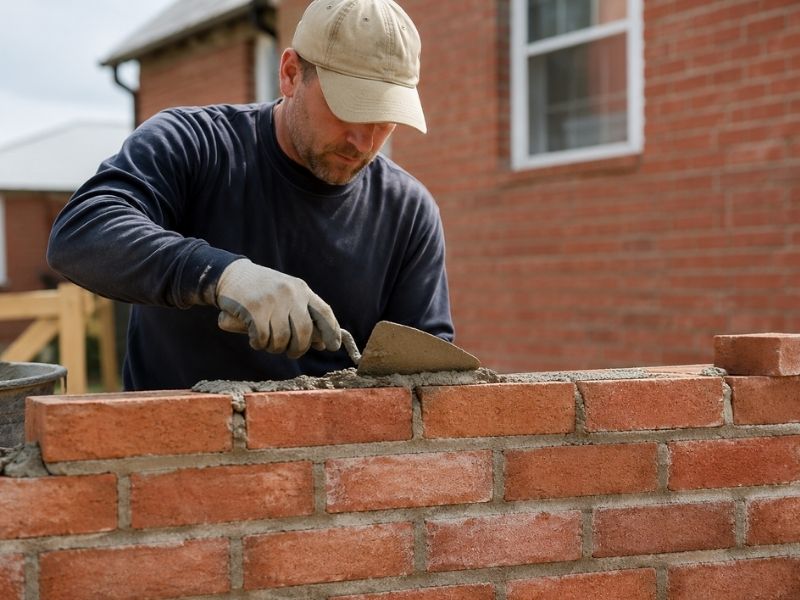
Mason repairing a residential brick wall by applying fresh mortar during brick repair and restoration work

Brick repair is often the first thing homeowners ask about when they spot damage on a wall, step, or column. Not every situation calls for the same solution though. A small crack near a window is a different job than brick wall repair on a section that’s been taking water damage for years. Choosing the wrong approach costs more in the long run, and patching deep damage only delays a bigger problem.

Here’s how to tell the difference before you call anyone.

What Separates Repair from Replacement

The short answer: depth of damage and structural involvement.

Repair works when the brick itself is still solid. If the problem is limited to the mortar joints, a small crack, or minor surface wear, a mason can fix it without touching the brick at all.

Replacement becomes necessary when the brick has broken down structurally. Crumbling faces, deep fractures that run through the full thickness of the brick, or water damage that has compromised the core all point toward pulling the brick out and putting in new material.

One damaged brick in a wall doesn’t mean the whole section needs to come out. Ten damaged bricks in the same area, all showing the same pattern of failure, is a different situation.

When Brick Repair Is the Right Call

The Damage Is in the Mortar, Not the Brick

Mortar wears out faster than brick. A brick wall can last well over 100 years, but the mortar holding it together typically needs attention every 25 to 30 years. If the joints are crumbling, recessed, or cracking while the bricks themselves feel solid and show no surface flaking, repair is the right move.

A mason will cut out the damaged mortar to a depth of about 3/4 inch and pack fresh mortar in. The brick stays. The wall stays. The repair is done in a day on most residential jobs.

You’re Dealing with Hairline or Isolated Cracks

Small cracks that haven’t moved or grown are usually repairable. A mason will clean the crack, fill it with the right mortar mix, and seal it. The key word is “isolated.” One crack near a window corner is a repair job. The same crack showing up in six places along the same wall is a pattern worth investigating before touching anything.

Surface Spalling Is Caught Early

Spalling is when the face of a brick starts flaking or popping off. In early stages, where only the surface layer is affected and the brick core is still intact, damaged bricks can sometimes be replaced individually without disturbing the surrounding wall.

Brick repair costs for spalling run between $1,000 and $3,500 for sections up to 100 square feet. Catching it early keeps the job on the lower end of that range.

When Brick Replacement Is the Right Call

The Brick Has Failed All the Way Through

A brick that crumbles when you press it, snaps cleanly across its full width, or shows deep fractures on multiple faces has failed structurally. Filling the surface won’t help. The brick needs to come out.

This matters most in load-bearing walls and columns where every unit carries weight. A structurally compromised brick in that context isn’t a cosmetic problem.

Water Got Inside and Stayed There

Freeze-thaw damage is the most common reason bricks fail in climates with cold winters. Water enters through a crack or worn mortar joint, sits inside the brick, freezes, expands, and breaks the brick apart from the inside. You’ll see it as deep pitting, missing chunks, or bricks that look like they’ve been chewed from the inside out.

Repairing the mortar around a freeze-damaged brick doesn’t fix the brick. It has to come out.

Large Sections Are Moving or Bowing

A wall section that’s visibly bowing outward or has shifted from its original plane isn’t a repair job. Something structural is driving that movement, whether it’s water pressure behind the wall, failing wall ties, or foundation issues. Patching bricks on a moving wall is a waste of money until the cause gets sorted out.

Bowing brick wall repairs run between $2,000 and $6,500 per 100 square feet depending on the repair method and cause.

The Gray Area: When It Could Go Either Way

Some situations aren’t obvious. A wall with moderate spalling across a large area might be repaired in sections or replaced entirely depending on how far the damage has progressed and how well the surrounding bricks are holding up.

A mason will do a tap test. Solid bricks produce a clear ring. A hollow or dull sound means the brick face has separated from the core, and that brick is a replacement candidate even if it looks fine on the surface.

Age matters too. Bricks made before the 1920s are often softer than modern brick and respond differently to repair attempts. Using the wrong mortar strength on old soft brick can actually cause more damage than the original problem. A mason experienced with older masonry will know how to match the mortar to the material.

How a Mason Makes the Call

A good mason won’t quote repair or replacement over the phone without seeing the wall. The inspection involves:

  • Checking mortar joint depth and condition
  • Pressing and tapping individual bricks to test core integrity
  • Looking for patterns in where the damage appears
  • Checking for moisture sources nearby (gutters, grading, pooling water)
  • Assessing whether the damage is isolated or systemic

That last point matters more than most homeowners expect. Damage that keeps appearing in the same spot after repairs usually has a moisture source driving it. Fixing the brick without fixing the water problem means the same repair comes back in three years.

Frequently Asked Questions

Can you repair just one or two damaged bricks?

 Yes. Individual brick replacement is standard masonry work. A mason cuts out the damaged brick, cleans the cavity, and sets a matching replacement unit with fresh mortar. The tricky part is sourcing brick that matches the original in color and texture, especially in older homes.

How long does brick repair last? 

A properly done repair with the right mortar mix lasts 20 to 30 years in most conditions. Repairs that fail early usually used the wrong mortar type or didn’t address the moisture source causing the original damage.

Is brick replacement more expensive than repair? 

Usually yes, but not always by as much as homeowners expect on small sections. Replacing five badly damaged bricks may cost similar to repointing a large section of mortar joints. Get a quote for both if your mason says either option applies to your situation.

What causes bricks to fail faster in some areas of a wall than others? 

Usually moisture. Areas near downspouts, ground level, or sections with poor drainage take more water exposure and fail sooner. North-facing walls that stay damp longer after rain also tend to show damage earlier than south-facing walls.

Do I need a permit for brick repair or replacement? 

For most standard repair and replacement work, no permit is required. Structural repairs to load-bearing walls may require one depending on local building codes. Your mason should know the local requirements and flag it before work starts.

Posted in Brick | Tagged brick mason, brick masonry, brick masonry problems

Brick Masonry Problems Homeowners Notice After Heavy Rain

Madison Brick & Stone Posted on May 18, 2026 by madisonBSMay 14, 2026
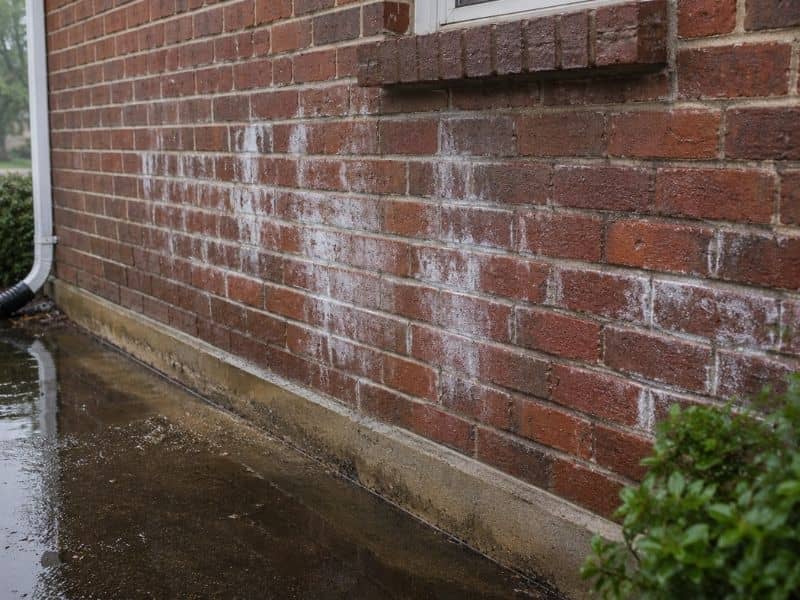
Wet brick home exterior after heavy rain showing white stains, moisture buildup, and water pooling near the foundation

Heavy storms can reveal issues that homeowners never noticed before. Brick masonry often looks strong and durable from the outside, but rain has a way of exposing weak spots that stay hidden during dry weather. After several days of heavy rain, you might suddenly notice white stains, damp areas, loose mortar, or changes in the appearance of your brickwork. Small warning signs can become larger problems if they are ignored.

In Madison, periods of strong rain can put extra stress on homes and outdoor masonry features. Water can collect near foundations, seep into tiny openings, and slowly create damage over time. Knowing what to look for can help homeowners catch issues early and avoid more expensive repairs later.

Why Does Brick Masonry Show Problems After Heavy Rain?

Heavy rain makes hidden brick problems easier to spot because water moves through areas that already have weaknesses. Small cracks, aging mortar joints, poor drainage, and trapped moisture become more visible after a storm.

Brick surfaces are designed to handle weather, but moisture can still find paths through weak points. According to masonry experts, water management systems such as drainage paths and weep holes help direct moisture away from structures. If these systems are blocked or if water pools around the home, brick surfaces can begin showing signs of stress.

Many homeowners assume rain only affects roofs and gutters. In reality, brick and stone surfaces can also reveal early signs of moisture problems.

What Brick Problems Should Homeowners Look For After Rain?

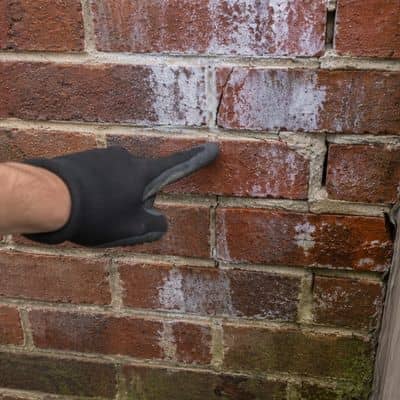
Close-up of a brick wall showing white stains, cracked mortar, and moisture damage being inspected after heavy rain

After heavy rain, homeowners should pay attention to changes that were not visible before the storm. Even small differences can signal hidden moisture issues.

Watch for these warning signs:

  • White powdery stains on brick surfaces
  • Cracked or missing mortar joints
  • Damp or darker sections of brick
  • Water pooling near masonry walls
  • Loose or shifting bricks
  • Brick discoloration
  • Small gaps forming around masonry features

These signs do not always mean major structural damage is happening. However, repeated exposure to moisture can gradually weaken materials over time.

The earlier these issues are found, the easier they are often to fix.

Are White Stains on Brick a Serious Problem?

White stains on brick are usually called efflorescence. This happens when water moves through brick and carries natural salts to the surface. Once the moisture evaporates, the salts remain behind as a white powdery residue.

The stain itself is not usually dangerous. The bigger concern is what the stain reveals.

Efflorescence often tells homeowners that moisture is repeatedly moving through the masonry. If the stains keep returning after cleaning, water may be entering from another source.

Common causes include:

  • Water collecting near the foundation
  • Poor drainage around the home
  • Small cracks allowing moisture inside
  • Areas that stay damp after rain

Some homeowners simply wash away the white residue and move on. If the moisture source remains, the same issue often comes back.

Why Do Mortar Joints Crack or Wash Out?

Mortar joints hold bricks together. Over time, age and moisture exposure can weaken these joints.

Repeated wet conditions can slowly wear away older mortar. Heavy rain may speed up damage that was already beginning. Small cracks can allow water to enter deeper into the masonry system.

Several factors can contribute to mortar damage:

Age and wear

Older homes naturally experience material breakdown over time.

Drainage problems

Water sitting near walls can increase moisture exposure.

Expansion and movement

Materials expand and contract during changing weather conditions.

Previous poor repairs

Using the wrong mortar materials during earlier repairs can create future problems.

Many homeowners only notice missing mortar after storms because wet surfaces make damaged areas easier to see.

When Should You Call a Mason After Heavy Rain?

Call a professional if signs continue appearing after multiple storms or if damage seems to be getting worse.

Some situations should not wait:

  • Loose bricks moving by hand
  • Deep gaps in mortar joints
  • Water entering interior walls
  • Leaning masonry sections
  • White stains repeatedly returning
  • Large areas of cracking

A trained brick mason can determine whether the issue is cosmetic or a sign of a deeper moisture problem.

Small repairs completed early are usually simpler than large repairs after years of water exposure.

How Can Homeowners Prevent Rain Related Masonry Damage?

Prevention often starts with water control around the home. Many masonry problems begin because water stays in places where it should not.

Homeowners can reduce future issues by:

  • Keeping gutters clean
  • Making sure downspouts direct water away from the house
  • Watching for standing water after storms
  • Checking brick surfaces each season
  • Addressing small mortar damage early
  • Scheduling inspections if recurring issues appear

Routine attention can help extend the life of masonry features and reduce costly surprises.

Heavy rain does not automatically mean serious damage. However, when brick surfaces suddenly look different after storms, it is often worth paying attention. Small clues can reveal larger moisture issues before they become harder and more expensive to repair.

Frequently Asked Questions

What causes white stains on brick after rain?

White stains are often caused by efflorescence. Water carries natural salts through the brick and leaves them behind when moisture evaporates.

Can heavy rain damage brick masonry?

Heavy rain itself may not directly damage brick, but it can expose weak mortar joints, drainage issues, and moisture problems already developing.

Is cracked mortar a serious problem?

Small cracks can grow over time. Once moisture enters, the damage can spread and lead to larger repairs.

How often should masonry be inspected?

A seasonal visual inspection is helpful, especially after strong storms or periods of heavy rainfall.

Posted in Masonry | Tagged brick inspection, brick masonry problems

Post navigation

Newer posts →

© Copyright Madison Brick & Stone
Madison, Alabama ​35758
Phone: (256) 270-2702

Privacy Policy | Terms of Use

Web Development and SEO by: AuburnBusiness.com

The owner of this website, AuburnBusiness, LLC, provides marketing for local skilled labor businesses in the Huntsville and Madison, AL area.

↑