↓
 

Madison Brick & Stone

Brick & Stone Masons in Madison, AL

Madison Brick & Stone
  • Home
  • Brick Masonry
  • Stone Masonry
  • Indoor Fireplaces
  • Outdoor Fireplace
Home→Tags brick mason - Page 2 << 1 2 3 >>

Tag Archives: brick mason

Post navigation

← Older posts
Newer posts →

Brick Pavers vs. Concrete Pavers: Key Differences

Madison Brick & Stone Posted on June 9, 2026 by madisonBSJune 3, 2026
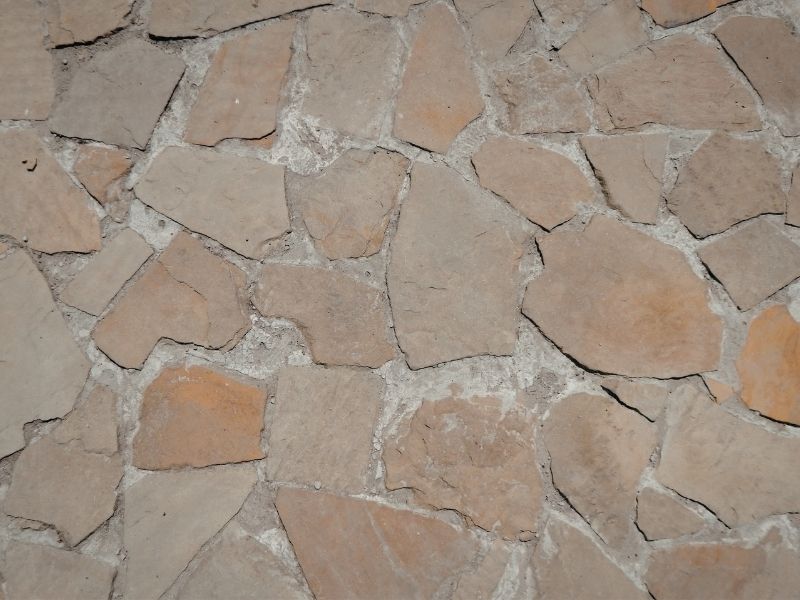
Natural stone paver surface used for patios and walkways with irregular shapes

If you’re planning a patio, driveway, or walkway, the choice between brick pavers and concrete pavers comes up fast. Both materials look good in photos. Both hold up to regular use. But they behave differently over time, cost differently to install and repair, and suit different types of projects. Knowing the key differences before you buy saves you from making a decision you’ll regret two summers from now.

What Each Material Actually Is

Brick pavers are made from clay that gets fired in a kiln at high temperatures. The color runs through the entire unit, so if the surface gets chipped or worn, the material underneath looks the same. Clay brick has been used in paving applications for centuries, and the manufacturing process hasn’t changed dramatically.

Concrete pavers are made from a mixture of cement, sand, aggregate and pigment that gets pressed and cured under controlled conditions. They come in a far wider range of shapes, sizes and colors than clay brick. The color, though, sits mostly on the surface. A worn or chipped concrete paver can look noticeably different from an intact one.

That difference in how color is achieved matters more than most homeowners expect.

Appearance Over Time

Clay brick ages well. The color softens and the surface picks up a weathered look that most people find appealing. It doesn’t fade so much as it settles into a patina that looks intentional.

Concrete pavers fade. The pigment in the surface layer breaks down under UV exposure, and after several years the color can look noticeably washed out compared to when it was installed. Some manufacturers offer UV-resistant coatings, and sealing concrete pavers regularly slows the fading. But it doesn’t stop it entirely.

If long-term appearance matters to you and you’d rather not reseal every two or three years, clay brick holds its look with less intervention.

Durability and Strength

Concrete pavers are generally stronger than clay brick by compressive strength measurements. Standard concrete pavers typically achieve 8,000 psi or higher. Clay brick pavers usually fall in the 8,000 to 12,000 psi range depending on the grade, though lower-grade clay pavers can come in below that.

For most residential applications, both materials are strong enough that compressive strength isn’t the deciding factor. Where durability differences show up more practically is in how each material handles freeze-thaw cycles.

Clay brick is denser and more resistant to water absorption than most concrete pavers. When water gets into a paver and freezes, it expands. Repeated freeze-thaw cycles cause spalling and surface deterioration. Clay brick, with its lower absorption rate, tends to hold up better in climates with cold winters.

Concrete pavers can perform well in freeze-thaw conditions too, but the quality varies more across manufacturers. A lower-quality concrete paver in a wet, cold climate is a real problem. A low-quality clay brick in the same conditions is less of one.

Repair and Replacement

Both materials are installed without mortar between units in most residential applications, which makes repair straightforward in theory. If a unit gets cracked or stained, you pull it out and replace it.

The practical difference is matching. Clay brick color is consistent across manufacturers and through the life of the unit. Finding a replacement brick that blends in with a ten-year-old installation is usually possible.

Concrete paver color fades, so a new unit placed into an older installation stands out. The replacement will look brighter and more saturated than the surrounding pavers for years until it catches up. If the original product has been discontinued, matching becomes even harder.

Cost Comparison

Concrete pavers cost less upfront. Material costs for standard concrete pavers typically run lower per square foot than clay brick, and the wider range of sizes can reduce cutting waste on complex layouts.

Clay brick pavers carry a higher upfront cost. Installation labor is similar for both, so the material price difference is where the gap shows up.

Over a longer period, the calculus shifts. Concrete pavers require more maintenance spending on sealants to preserve color and surface integrity. Clay brick needs less of that. The total cost over fifteen or twenty years tends to be closer than the upfront numbers suggest.

Which One Works Better for Each Use Case

For driveways, both materials work, but concrete pavers in a thicker format handle vehicle weight well and come in sizes that suit larger surface areas. Clay brick driveways look sharp but require careful selection of a grade rated for vehicle traffic.

For patios and walkways, clay brick is hard to beat on appearance over time. The natural color variation and the way it ages gives outdoor spaces a character that poured concrete or concrete pavers rarely match.

For pool decks, neither is ideal without careful thought about surface texture and heat absorption. Light-colored concrete pavers stay cooler underfoot in direct sun. Textured clay brick provides good grip when wet.

For front entries and walkways where appearance matters most and traffic is lighter, clay brick consistently outperforms concrete pavers on long-term aesthetics.

What to Ask Before You Decide

A few practical questions narrow the choice fast.

How much freeze-thaw activity does the area get? If the answer is significant, clay brick is the safer material choice.

How important is long-term color consistency? If you want the surface to look close to the same in fifteen years with minimal maintenance, clay brick wins.

What’s the upfront budget? If cost is the primary constraint, concrete pavers deliver solid performance at a lower entry price.

Are you installing over a large area with complex cuts? Concrete pavers come in more shapes and sizes, which can simplify layout on irregular spaces.
Posted in Brick | Tagged brick mason, brick masonry, brick pavers

Painted Brick: Does It Hurt Your Home or Help It?

Madison Brick & Stone Posted on June 3, 2026 by madisonBSJune 3, 2026
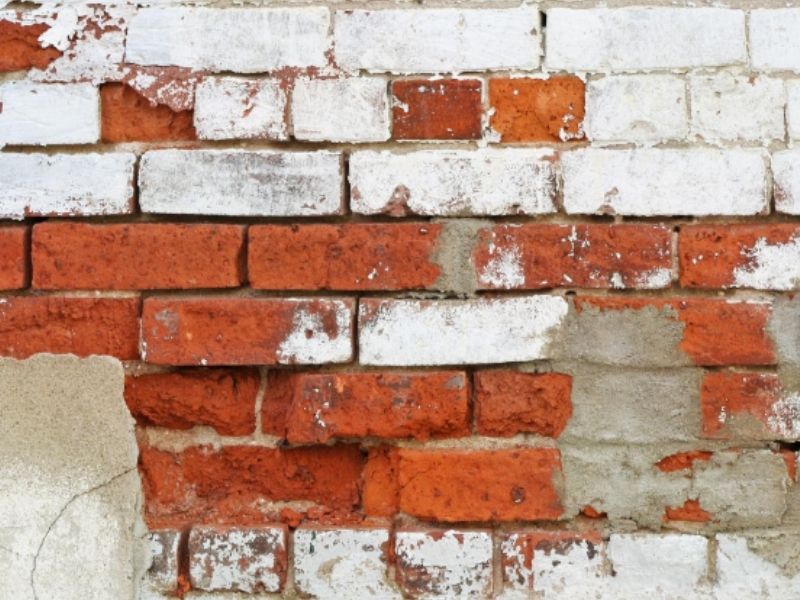
Painted brick showing peeling paint and moisture damage on a masonry wall

Most homeowners think painted brick is just a cosmetic choice. Pick a color, roll it on, done. But brick is one of the few building materials that actually needs to breathe, and paint can get in the way of that. Before you commit to painted brick on your home, there are a few things worth understanding about how the material works and what can go wrong.

What “Breathing” Actually Means for Brick

Brick absorbs moisture. It pulls it in during rain and releases it as temperatures change. That cycle is normal. The brick handles it fine on its own.

When you paint brick, you add a barrier over the surface. If that barrier traps moisture inside the wall instead of letting it escape, the water has nowhere to go. It builds up. Over time, that trapped moisture leads to spalling, where the face of the brick flakes or pops off. It can also cause efflorescence, mold growth behind the paint film, and mortar deterioration.

The risk depends heavily on the type of paint used. Regular exterior paint creates a vapor-impermeable film. Masonry-specific paint and mineral-based paints are more breathable and carry less risk. Many homeowners use the wrong product and don’t find out until problems appear two or three years later.

Does Painted Brick Hurt Resale Value?

This one gets debated. The short answer: it varies by market and how well the job was done.

In some neighborhoods, a freshly painted brick exterior reads as updated and appealing. In others, buyers see painted brick and immediately think about the maintenance commitment and the fact that it can’t easily be undone.

The bigger issue for resale is permanence. Painted brick is difficult and expensive to reverse. Sandblasting or chemical stripping can remove paint, but both methods carry a real risk of damaging the brick surface permanently. Once you paint, you’re largely committed to repainting every five to ten years for the life of the home.

Real estate professionals in brick-heavy housing markets often advise caution. Buyers who want original brick won’t be swayed by a painted version of it, and the pool of buyers narrows slightly as a result.

The Maintenance Cycle Homeowners Don’t Anticipate

Unpainted brick is genuinely low maintenance. Hose it down occasionally, inspect the mortar every few years, and it largely takes care of itself.

Painted brick adds a recurring maintenance obligation. Paint on masonry fades, chalks, peels, and cracks. Depending on sun exposure and climate conditions, a repaint is typically needed every five to ten years. Each repaint job requires proper surface prep, which on brick means cleaning, patching any damaged mortar, and priming before the topcoat goes on.

Over a twenty-year period, the cost of maintaining painted brick adds up considerably compared to leaving it unpainted. That’s a cost many homeowners don’t factor in when making the initial decision.

The Right Paint for Painted Brick Exteriors

Using standard exterior latex or oil-based paint on brick is one of the most common mistakes. These products are designed for wood or fiber cement siding, not masonry. They form a relatively impermeable film that sits on top of the brick rather than bonding with it.

Masonry-specific elastomeric coatings are more flexible and bond differently. Mineral silicate paints, sometimes called silicate dispersion paints, actually penetrate into the masonry and become part of the surface. They’re more breathable and far less likely to peel.

The tradeoff is cost and availability. Silicate paints are harder to source and significantly more expensive than standard exterior paint. A contractor experienced with masonry will know the difference. Many general painters don’t.

When Painted Brick Actually Makes Sense

There are legitimate reasons to paint brick. If the existing brick is badly stained, discolored from previous repairs, or visually inconsistent across a wall from patching work, paint can unify the surface in a way that’s difficult to achieve otherwise.

Older homes sometimes have brick that was never intended to be a finished surface. In those cases, the brick quality is poor and painting is a reasonable solution.

If you’re working with interior brick in a low-moisture area, the breathability issue largely goes away. Interior painted brick carries far less risk than exterior painted brick because moisture management isn’t a factor.

The key question to ask before painting is whether the problem actually requires paint, or whether cleaning, repointing, and sealing gets you to the same result. Most brick and stone masons lean toward the second option when the brick underneath is still in good shape. 

Frequently Asked Questions

Does painted brick cause permanent damage? 

Painted brick doesn’t cause immediate damage, but using the wrong paint type or painting over brick with existing moisture problems can lead to spalling, peeling, and mortar failure over time. The damage builds slowly and often doesn’t show up until years later.

Can painted brick be reversed? 

Yes, but it’s difficult. Sandblasting, chemical stripping, and pressure washing can remove paint from brick, but all three methods risk damaging the brick surface or mortar joints in the process. Full removal to original condition is rarely guaranteed.

What type of paint is safest for painted brick exteriors? 

Mineral silicate paint is considered the safest option for exterior brick because it bonds with the masonry rather than forming a surface film. Elastomeric masonry coatings are a more commonly available alternative. Standard latex or oil-based exterior paint carries the most risk.

How long does painted brick last before repainting? 

On exterior brick, paint typically lasts five to ten years before it needs to be recoated. Sun exposure, moisture levels, and paint quality all affect how quickly it fades or peels.

Does painted brick affect home value? 

It varies by market. Some buyers prefer the look of painted brick. Others see it as a maintenance liability or a barrier to getting back to original brick. In markets where original brick is valued, painting can narrow your buyer pool.

Posted in Brick | Tagged brick mason, brick masonry, brick masonry problems

Brick Repair vs. Brick Replacement: How to Know Which You Need

Madison Brick & Stone Posted on May 29, 2026 by madisonBSMay 27, 2026
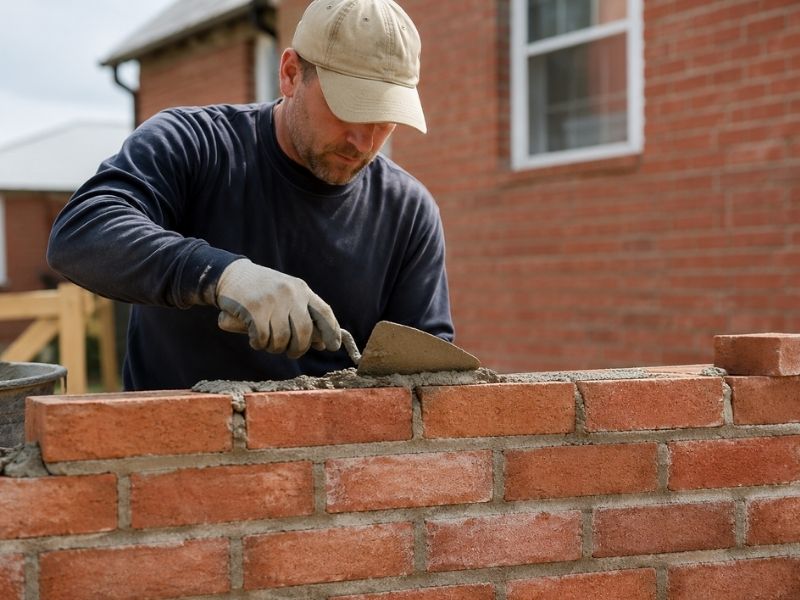
Mason repairing a residential brick wall by applying fresh mortar during brick repair and restoration work

Brick repair is often the first thing homeowners ask about when they spot damage on a wall, step, or column. Not every situation calls for the same solution though. A small crack near a window is a different job than brick wall repair on a section that’s been taking water damage for years. Choosing the wrong approach costs more in the long run, and patching deep damage only delays a bigger problem.

Here’s how to tell the difference before you call anyone.

What Separates Repair from Replacement

The short answer: depth of damage and structural involvement.

Repair works when the brick itself is still solid. If the problem is limited to the mortar joints, a small crack, or minor surface wear, a mason can fix it without touching the brick at all.

Replacement becomes necessary when the brick has broken down structurally. Crumbling faces, deep fractures that run through the full thickness of the brick, or water damage that has compromised the core all point toward pulling the brick out and putting in new material.

One damaged brick in a wall doesn’t mean the whole section needs to come out. Ten damaged bricks in the same area, all showing the same pattern of failure, is a different situation.

When Brick Repair Is the Right Call

The Damage Is in the Mortar, Not the Brick

Mortar wears out faster than brick. A brick wall can last well over 100 years, but the mortar holding it together typically needs attention every 25 to 30 years. If the joints are crumbling, recessed, or cracking while the bricks themselves feel solid and show no surface flaking, repair is the right move.

A mason will cut out the damaged mortar to a depth of about 3/4 inch and pack fresh mortar in. The brick stays. The wall stays. The repair is done in a day on most residential jobs.

You’re Dealing with Hairline or Isolated Cracks

Small cracks that haven’t moved or grown are usually repairable. A mason will clean the crack, fill it with the right mortar mix, and seal it. The key word is “isolated.” One crack near a window corner is a repair job. The same crack showing up in six places along the same wall is a pattern worth investigating before touching anything.

Surface Spalling Is Caught Early

Spalling is when the face of a brick starts flaking or popping off. In early stages, where only the surface layer is affected and the brick core is still intact, damaged bricks can sometimes be replaced individually without disturbing the surrounding wall.

Brick repair costs for spalling run between $1,000 and $3,500 for sections up to 100 square feet. Catching it early keeps the job on the lower end of that range.

When Brick Replacement Is the Right Call

The Brick Has Failed All the Way Through

A brick that crumbles when you press it, snaps cleanly across its full width, or shows deep fractures on multiple faces has failed structurally. Filling the surface won’t help. The brick needs to come out.

This matters most in load-bearing walls and columns where every unit carries weight. A structurally compromised brick in that context isn’t a cosmetic problem.

Water Got Inside and Stayed There

Freeze-thaw damage is the most common reason bricks fail in climates with cold winters. Water enters through a crack or worn mortar joint, sits inside the brick, freezes, expands, and breaks the brick apart from the inside. You’ll see it as deep pitting, missing chunks, or bricks that look like they’ve been chewed from the inside out.

Repairing the mortar around a freeze-damaged brick doesn’t fix the brick. It has to come out.

Large Sections Are Moving or Bowing

A wall section that’s visibly bowing outward or has shifted from its original plane isn’t a repair job. Something structural is driving that movement, whether it’s water pressure behind the wall, failing wall ties, or foundation issues. Patching bricks on a moving wall is a waste of money until the cause gets sorted out.

Bowing brick wall repairs run between $2,000 and $6,500 per 100 square feet depending on the repair method and cause.

The Gray Area: When It Could Go Either Way

Some situations aren’t obvious. A wall with moderate spalling across a large area might be repaired in sections or replaced entirely depending on how far the damage has progressed and how well the surrounding bricks are holding up.

A mason will do a tap test. Solid bricks produce a clear ring. A hollow or dull sound means the brick face has separated from the core, and that brick is a replacement candidate even if it looks fine on the surface.

Age matters too. Bricks made before the 1920s are often softer than modern brick and respond differently to repair attempts. Using the wrong mortar strength on old soft brick can actually cause more damage than the original problem. A mason experienced with older masonry will know how to match the mortar to the material.

How a Mason Makes the Call

A good mason won’t quote repair or replacement over the phone without seeing the wall. The inspection involves:

  • Checking mortar joint depth and condition
  • Pressing and tapping individual bricks to test core integrity
  • Looking for patterns in where the damage appears
  • Checking for moisture sources nearby (gutters, grading, pooling water)
  • Assessing whether the damage is isolated or systemic

That last point matters more than most homeowners expect. Damage that keeps appearing in the same spot after repairs usually has a moisture source driving it. Fixing the brick without fixing the water problem means the same repair comes back in three years.

Frequently Asked Questions

Can you repair just one or two damaged bricks?

 Yes. Individual brick replacement is standard masonry work. A mason cuts out the damaged brick, cleans the cavity, and sets a matching replacement unit with fresh mortar. The tricky part is sourcing brick that matches the original in color and texture, especially in older homes.

How long does brick repair last? 

A properly done repair with the right mortar mix lasts 20 to 30 years in most conditions. Repairs that fail early usually used the wrong mortar type or didn’t address the moisture source causing the original damage.

Is brick replacement more expensive than repair? 

Usually yes, but not always by as much as homeowners expect on small sections. Replacing five badly damaged bricks may cost similar to repointing a large section of mortar joints. Get a quote for both if your mason says either option applies to your situation.

What causes bricks to fail faster in some areas of a wall than others? 

Usually moisture. Areas near downspouts, ground level, or sections with poor drainage take more water exposure and fail sooner. North-facing walls that stay damp longer after rain also tend to show damage earlier than south-facing walls.

Do I need a permit for brick repair or replacement? 

For most standard repair and replacement work, no permit is required. Structural repairs to load-bearing walls may require one depending on local building codes. Your mason should know the local requirements and flag it before work starts.

Posted in Brick | Tagged brick mason, brick masonry, brick masonry problems

Post navigation

← Older posts
Newer posts →

© Copyright Madison Brick & Stone
Madison, Alabama ​35758
Phone: (256) 270-2702

Privacy Policy | Terms of Use

Web Development and SEO by: AuburnBusiness.com

The owner of this website, AuburnBusiness, LLC, provides marketing for local skilled labor businesses in the Huntsville and Madison, AL area.

↑