Brick walls look solid. That’s the whole point. But weep holes tell a different story. These small openings, spaced along the bottom row of bricks, do something the wall can’t do on its own. They let water out. And if you’ve never noticed them before, you’re not alone. Most homeowners walk past them every day without a second thought.
That’s worth changing.
What Are Weep Holes and What Do They Do?
Brick walls are not waterproof. Rain pushes through small gaps in the mortar. Water vapor from inside the house moves through the wall and collects in the air space behind the brick. That gap exists by design. It gives the wall room to breathe. But when moisture builds up in that space with no way out, problems follow.
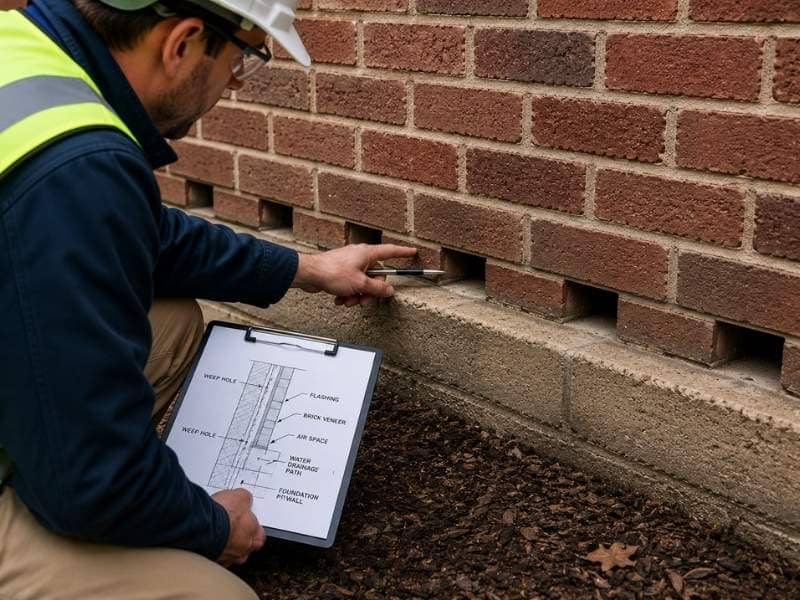
Weep holes sit at the base of the brick layer, right above the flashing. Gravity does the rest. Water drains down, reaches the opening, and exits the wall. The system is simple, but it only works when those openings stay clear.
According to the Brick Industry Association, weep holes should be spaced no more than 33 inches apart along the base course to provide adequate drainage across the full wall.
How Trapped Moisture Damages Brick Walls
When moisture has no way to exit the wall cavity, it soaks into mortar joints, expands during freezing temperatures, and creates conditions where mold can grow. Each of these problems gets worse over time and costs more to fix the longer it goes unaddressed.
Here’s what that leads to:
- Mortar breakdown. Water soaks into joints and softens the bond between bricks. A hairline gap turns into a crumbling joint. That crumbling joint lets in more water, which widens the damage further.
- Brick cracking and spalling. Trapped moisture freezes in cold weather. Ice expands. That expansion pushes outward against the face of the brick until it cracks or breaks off in pieces. The Portland Cement Association notes that freeze-thaw damage accounts for more than 25% of masonry repair calls in cold climates.
- Mold inside the wall. A wet wall cavity is exactly where mold grows. The EPA reports that mold can begin developing on wet building materials within 24 to 48 hours. By the time it becomes visible or noticeable, it has usually already spread across the framing behind the brick.
None of these problems announce themselves early. That’s what makes proper drainage so important.
What Blocked or Missing Weep Holes Look Like From the Outside
The most visible signs of drainage failure in brick masonry are white staining on the brick surface, soft or sandy mortar at the base of the wall, cracks along mortar joints near corners or windows, and damp interior walls after rain.
You don’t need to open up a wall to know something is wrong. Most drainage problems leave marks on the surface.
White staining is usually the first sign. That chalky residue, called efflorescence, forms when water moves through the masonry and carries dissolved salts to the surface. It wipes off, but it keeps coming back until the underlying drainage problem gets fixed.
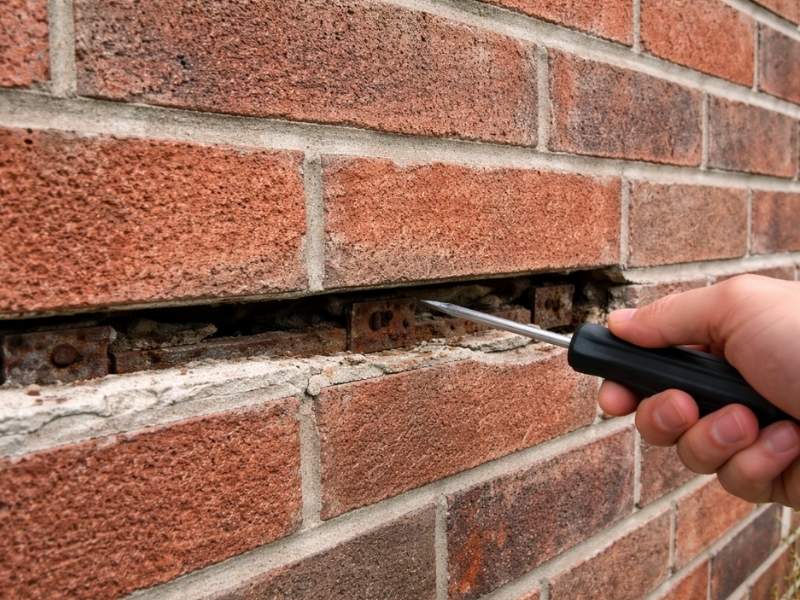
Soft mortar at the base is another signal. Run a finger along the mortar joint. If it feels sandy or crumbles under light pressure, water has been sitting there long enough to break it down.
Cracks near corners and window frames tend to show up where water concentrates. Brick faces that start to chip or flake at the edges are showing early freeze-thaw damage.
Inside the house, moisture stains on drywall near exterior walls, or a damp feeling along the base of an exterior room after heavy rain, can trace back to a drainage issue outside.
One sign on its own doesn’t always point to weep holes. Two or more together usually do.
How to Keep Weep Holes Clear
Inspect weep holes twice a year and after major storms. Clear debris with a thin wire or small brush. Keep mulch and soil below the openings. Check the flashing condition above windows and doors. Use mesh inserts to block pests without sealing the drainage path.
Here’s what that inspection looks like in practice:
- Find the openings. Weep holes sit along the first or second row of bricks above grade. They also appear above windows and doors. They look like short gaps where mortar was left out between bricks.
- Clear any blockage. A thin wire or a small brush is enough. The goal is to open the passage so water can move through freely. Don’t force anything deep into the wall.
- Check the area around the base. Mulch, soil, and landscaping materials piled against the wall can cover weep holes entirely. Keep the base of the wall clear, with at least a few inches of separation between the soil line and the openings.
- Look at the flashing. Weep holes work as part of a system. If the flashing above windows or at the base of the wall is damaged, water doesn’t reach the openings the way it should. Damaged flashing needs repair, not just a cleared weep hole.
- Use mesh inserts if needed. Insects sometimes nest inside weep holes. Mesh inserts solve that problem without blocking drainage. Never seal the openings with caulk or mortar.
Frequently Asked Questions
What is the difference between a weep hole and a vent in brick masonry?
Weep holes and vents both appear in the brick base course, but they serve different purposes. Weep holes drain liquid water out of the wall cavity. Vents allow air to circulate through the cavity and help the wall dry faster after rain or condensation. Some installations include both. Others rely on weep holes alone to handle both functions.
Do newer homes have weep holes?
Most homes built after modern masonry standards became common include weep holes, but not all. Some older construction omitted them entirely. Others had them sealed during remodels by contractors unfamiliar with their purpose. The only way to know for certain is to inspect the base course of the brick wall.
Can insects get into the house through weep holes?
Weep holes are small, but some insects can enter through them. Mesh inserts designed for brick masonry are the standard solution. They allow water and air to move freely while blocking most pests. They’re available at most hardware stores and easy to install without professional help.
Is efflorescence a sign of a serious problem?
Efflorescence by itself is not structural damage. It’s a mineral deposit left behind as water evaporates from the surface. But it does indicate that water is moving through the masonry in a way it shouldn’t. Recurring efflorescence, especially along the base of a wall, usually points to a drainage issue that benefits from a closer look.