Stone Hearth Construction Details That Affect Long-Term Durability
A natural stone hearth that cracks after three years usually wasn’t a bad stone. It was a bad build. Most hearth failures trace back to what happened before the first stone ever went down, not the stone itself.
For developers overseeing fireplace installs, this is worth knowing before a project starts, not after a client calls about a cracked hearth two winters later. The details below cover what actually determines whether a stone hearth lasts decades or needs rework within a few years.
How Substrate Preparation Influences Stone Hearth Stability Over Time
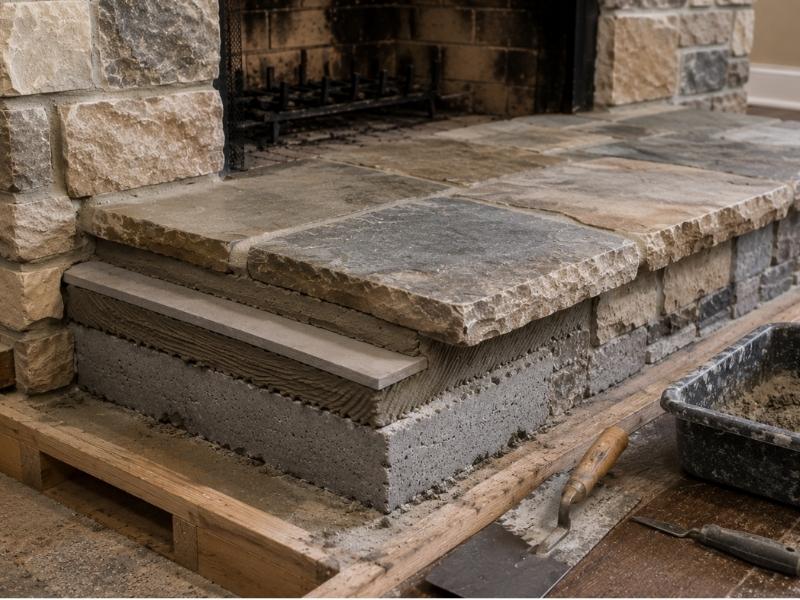
The substrate is the base layer under the hearth stone. Most people never see it, which is exactly why it gets skipped or rushed on lower-quality jobs.
A proper understanding of hearth base construction requirements is critical because the base needs to do three things:
- Support the full weight of the stone without flexing
- Stay level and rigid even as the surrounding floor settles slightly over time
- Resist moisture that could weaken the bond between substrate and stone
Common substrate mistakes include using a subfloor rated for standard flooring instead of the added weight of stone, skipping a cement backer board in favor of plywood alone, or failing to check for level before setting stone.
None of these mistakes show up on day one. They show up as hairline cracks a year or two later, once the substrate has flexed under weight it wasn’t built to hold.
Why Heat Expansion Cycles Create Stress in Stone Hearth Installations
Stone expands when it heats up and contracts when it cools. That’s normal. The problem starts when the hearth is built in a way that doesn’t account for this movement.
What Happens Without Expansion Room
A hearth installed tight against surrounding materials, with no room to expand, pushes against whatever’s next to it every time a fire heats the stone. Over hundreds of heat cycles, that repeated stress leads to cracking, either in the stone itself or in the mortar joints holding it together.
Why This Takes Years to Show
A single heat cycle doesn’t crack stone. It’s the repetition that causes fatigue, similar to bending a paperclip back and forth until it snaps. A hearth used regularly for years builds up stress slowly, which is why cracking often appears well after the original installation, long after anyone remembers how it was built.
The Role of Mortar Composition in Preventing Early Hearth Deterioration
Mortar has to do two jobs at once near a hearth: bond the stone securely, and handle heat exposure without breaking down early.
Standard mortar mixes aren’t always rated for the heat cycling a hearth experiences. Using the wrong mix leads to:
- Mortar that dries out and crumbles faster than normal wear would explain
- Weak bonding that lets stone shift slightly under thermal stress
- Joint failure concentrated near the firebox, where heat exposure is highest
A mortar mix rated for fireplace and hearth use, not general masonry, holds up significantly longer under repeated heat exposure. This is one of the cheapest details to get right during construction and one of the most expensive to fix afterward.
How Improper Stone Selection Leads to Surface Breakdown and Cracking
Not every stone type belongs on a hearth. Density and porosity both affect how a stone handles heat and moisture over time.
| Stone Property | Why It Matters for a Hearth |
| Density | Denser stone resists cracking under heat stress |
| Porosity | Porous stone absorbs moisture, which speeds up freeze and heat damage |
| Heat tolerance | Some stone types (like certain sandstones) degrade faster under direct, repeated heat |
Stone that looks similar on a showroom floor can perform very differently once it’s exposed to years of heat cycling. A stone chosen purely for appearance, without checking heat tolerance and density, is a common reason hearths develop surface flaking or cracking well before the rest of the fireplace shows wear.
Why Load Distribution Errors Cause Uneven Settling in Stone Hearths
A hearth carries real weight, and that weight needs to distribute evenly across the substrate and supporting structure below it. When it doesn’t, one section of the hearth settles faster than the rest.
Signs of a load distribution problem:
- One corner or edge of the hearth sits noticeably lower than the rest
- Cracks form in a line that follows an uneven settling pattern rather than random stress points
- Gaps appear between the hearth and surrounding flooring or trim
This usually traces back to uneven substrate support, often from gaps or soft spots left during construction. Once settling starts, it tends to get worse over time rather than stabilizing on its own, since the same weak point keeps taking on the same excess stress.
Frequently Asked Questions
How long should a properly built stone hearth last?
A hearth built with the correct substrate, mortar, and stone selection can last several decades with minimal issues. Most early failures are caused by construction shortcuts rather than material age.
Does the type of stone really affect hearth durability?
Yes. Denser and less porous stone performs better under repeated heat exposure. Softer or highly porous stone is more likely to crack or flake within a few years of regular use.
Why do hearth cracks often appear years after installation?
Cracking develops gradually due to heat cycling and load stress. A hearth may appear stable for years before thermal expansion or uneven settling causes visible damage.
Is standard masonry mortar safe to use for a hearth?
Not always. Standard mortar is not necessarily rated for high heat exposure near a firebox. Mortar formulated for fireplace and hearth applications performs better under repeated heat cycling.
What’s the most common cause of uneven hearth settling?
Uneven or inadequate substrate support is the most common cause. Gaps or weak spots beneath the hearth allow sections to settle unevenly, leading to slope or cracking over time.
