A stone fireplace is the kind of feature people notice the moment they walk into a room. The finish is what gives it staying power. The type of stone you choose and the way the surround is built decide whether the fireplace still looks right in twenty years or reads as dated by the next remodel. This piece focuses on the parts that shape that look: the stone finishes themselves, the surround around the firebox and how to bring a stone finish to a fireplace you already have.
Natural Stone Finishes That Work in Any Home
The finish sets the whole mood of a stone fireplace, and a handful of natural options have stayed popular for generations. Limestone is the refined choice. Cut into clean blocks or smooth slabs, it reads calm and formal, and it fits a traditional room as easily as a modern one. Fieldstone goes the other direction. Its rounded, irregular shapes give a rugged, old-world look that suits a cabin, a lodge or a farmhouse.
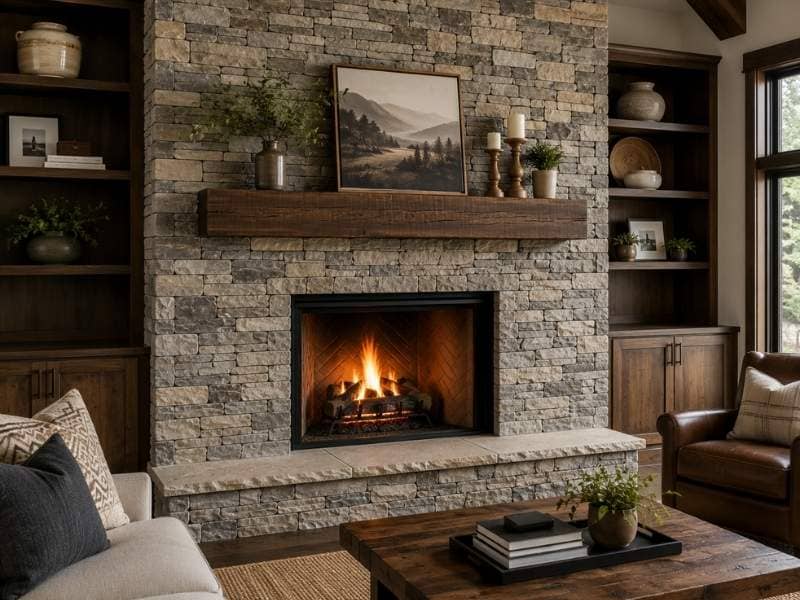
Ledgestone and stacked stone both lean contemporary, though in different ways. Ledgestone uses thin, linear strips set in tight horizontal lines, which gives a clean, layered face that works well in transitional homes. Stacked stone fits the pieces together with almost no visible mortar, so the wall reads as texture more than pattern. These finishes share one thing that keeps them current: none of them chase a trend, so none of them look tired a few years later. Color is its own decision, and our guide to choosing fireplace stone colors covers the neutral and earth-tone palettes that hold up over time.
Fireplace Surround Details That Shape the Whole Room
The surround is where a stone fireplace becomes custom. Four elements do most of the work, and each one changes how the fireplace feels. The hearth is the stone base at the floor. A raised hearth doubles as a bench and lifts the firebox closer to eye level, while a flush hearth keeps the look low and clean. Either way, the stone meets the code requirement for a noncombustible floor in front of the fire.
The mantel sets the tone above the opening. A reclaimed timber mantel warms up a cool stone face, and a stone or cast mantel gives a heavier, all-of-a-piece look. Then there’s the reach of the stone itself. A full-height surround carries the stone all the way to the ceiling and turns the fireplace into the anchor of the room, and it makes a space feel taller than stone that stops at the mantel. Custom accents finish the design. A keystone over the opening, corbels under the mantel or a rough stone lintel are the small touches that separate a builder-grade fireplace from one that looks designed.
Updating an Existing Fireplace With a Stone Finish
You don’t have to tear out a fireplace to change its look. Most dated brick or plain fireplaces can take a stone finish right over the existing face, which is one of the biggest visual changes you can make in a room. The tool for this is stone veneer, either thin-cut natural stone or a manufactured version that copies real stone in shape and color.
The work depends on what’s already there. Over solid brick or block, a mason can often bond the veneer directly after prepping the surface. Over drywall or a weaker substrate, the job starts with a moisture barrier and metal lath, then a scratch coat that gives the stone something to grip. Weight matters in the plan too. Full-thickness natural stone needs a supporting ledger at the base, while thin veneer stays light enough to hang on the prepared wall. Done well, a reface turns a builder-basic fireplace into the best feature in the room, and a stone fireplace tends to pull its weight at resale, which how masonry adds home value breaks down in full.
Choosing Stone That Handles the Heat
Looks aren’t the only test for a stone fireplace. If the stone sits close to a working firebox, it also has to take real heat without changing. Dense stones handle this best. Granite, hard limestone and natural fieldstone shrug off the warmth of a fire and hold their color. Softer or highly porous stones can discolor, and some flake or crack when they heat and cool over and over.
Clearance is the other half of the safety picture. Building codes set a minimum distance between the firebox opening and any combustible material, including a wood mantle, so a stone surround has to leave the right gaps around the fire. A mason who builds fireplaces knows those numbers and works with them. One more practical note: porous stone near a working fire can pick up soot over time, so a breathable sealer helps it shed marks and makes cleaning easier. Stone wears well with very little fuss, and how stone masonry holds up over the years covers that side in depth.
Frequently Asked Questions
What type of stone is best for a stone fireplace?
The best stone depends on the look you want and where it sits. For a refined, formal face, limestone is hard to beat. For a rugged feel, fieldstone leads. Ledgestone and stacked stone suit cleaner, modern rooms. If the stone sits right against a working firebox, lean toward a dense option like granite or hard limestone that takes heat without discoloring.
Can an existing fireplace be updated with a stone finish?
Yes, and it’s one of the most popular fireplace projects there is. A mason can apply thin stone veneer over existing brick, block or a prepared wall, so you get a full stone look without a teardown. A mason preps the surface first, and heavier natural stone may need a base ledger for support.
What’s the difference between ledgestone and stacked stone?
Both give a layered, textured face, but the detailing differs. Ledgestone uses thin, even strips set in straight horizontal lines for a tailored look. Stacked stone fits pieces of varied size tightly together with almost no visible mortar, so it reads rougher and more natural. Ledgestone tends to feel more modern, while stacked stone feels a touch more organic.
Should stone run full height or stop at the mantel?
Both work, and the room decides. A full-height surround, with stone all the way to the ceiling, makes a bold anchor and draws the eye up, which suits a room with tall ceilings. Stopping the stone at the mantel keeps the look lighter and leaves space for art or a mirror above. Higher ceilings usually reward going full height.
Is manufactured stone veneer a good choice for a fireplace?
For many homes, yes. Manufactured veneer copies the look of natural stone, weighs less and usually costs less to buy and install. Natural stone still wins on depth of color, since its color runs all the way through. Away from the direct heat of the firebox, a quality manufactured veneer holds up well and looks the part.