Retaining Wall Details That Make a Lasting Difference
A retaining wall does hard work that stays mostly out of sight. It holds back tons of soil, resists water pressure and keeps a slope from sliding onto whatever sits below. The details that decide whether it lasts thirty years or fails in five are the ones you can’t see once the wall is done. Drainage, base prep, reinforcement and the right materials all go in early, then vanish into the finished wall. Get them right, and the wall holds. Cut corners, and no surface repair will save it later.
Why Proper Drainage Is the Foundation of Every Retaining Wall
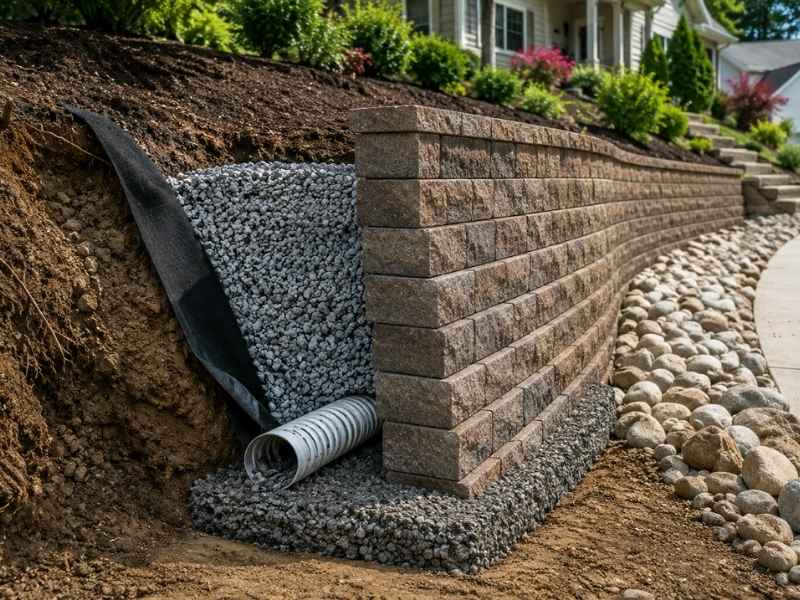
Water is the number one reason retaining walls fail. When rain soaks the soil behind a wall, that water has nowhere to go, and it builds up as hydrostatic pressure. A saturated slope can push against the back of a wall hard enough to crack it, bow it out or topple it. Good drainage relieves that pressure before it ever reaches a dangerous level.
Three features do most of the work:
- Gravel backfill, a layer of crushed stone packed behind the wall that lets water drain down instead of pooling against the face.
- A perforated drain pipe at the base, which collects the water that reaches the bottom and carries it away from the wall.
- Weep holes, small openings through the face that give trapped water a path out.
Sloped and hilly sites make this even more important. Water runs downhill and collects at the base of the slope, which is exactly where the wall stands. Clay-heavy soil raises the stakes again, since clay holds water and swells when wet, adding pressure the wall has to fight. A wall built without drainage on that kind of ground is on a short clock.
Building a Retaining Wall That Handles Changing Soil Conditions
The soil does more than sit behind the wall. It shifts, swells and settles with the seasons, and the wall has to handle all of it. Clay expands when wet and shrinks when dry, which means constant movement against the structure. Sandy soil drains well but can wash out or shift under load. Loam sits somewhere in the middle. A mason who reads the soil right builds for how that specific ground behaves.
Site prep is where that knowledge pays off. Grading shapes the ground so surface water flows away from the wall instead of toward it. Excavation has to reach firm, undisturbed soil, since loose fill under a wall settles unevenly and pulls the whole structure out of line. A compacted base spreads the load and gives the wall a stable footing. Skip the prep, and even strong materials sit on ground that won’t hold them.
Choosing Masonry Materials That Balance Strength and Appearance
Material choice affects how the wall performs and how it looks, and the two don’t always pull in the same direction. Natural stone is the premium option. It’s dense, weathers beautifully and can last for generations, but it costs more and needs a skilled hand to set well. A concrete block with a stone veneer is the practical middle ground. The block core carries the structural load while the veneer gives the finished look, so you get strength and appearance without the full price of solid stone.
Brick works best as an accent rather than the main structure on a tall wall. A brick cap or a banded course adds character and ties the wall to a brick home, though brick alone rarely handles the loads a real retaining wall faces. The right pick depends on wall height, the look you’re after and the budget you’re working with. A short garden wall gives you room to prioritize appearance. A tall wall holding back a real slope has to earn its keep on strength first.
Construction Details That Improve Long-Term Stability
A few structural choices separate a wall that holds from one that slowly gives way. Height comes first. Low walls are forgiving, but once a wall passes about four feet, the loads climb fast and most codes call for an engineered design. Building a tall wall by eye is how you end up with a lean that gets worse every year.
Reinforcement keeps the wall tied to the ground behind it. Geogrid, a strong mesh laid in horizontal layers back into the soil, anchors the wall so the whole mass resists the push of the slope. Block walls can also take rebar and grout through their cores for added strength. Setback, also called batter, tilts the wall slightly back into the hill so gravity works with the wall instead of against it. Base preparation ties it all together. A level, compacted gravel pad set below the frost line gives the wall a footing that won’t heave in winter or sink in spring. Miss these details, and the wall shifts and settles until the damage shows on the surface.
Long-Term Maintenance That Extends the Life of a Retaining Wall
Even a well-built wall needs a little attention to reach its full lifespan. The good news is that retaining walls ask for less upkeep than most parts of a home. A look twice a year catches most trouble early. Watch for a lean or bulge in the face, new cracks or blocks that have started to separate, since those are the first signs the wall is under stress it can’t handle.
Drainage needs the most ongoing care. Keep weep holes clear and make sure the drain outlet stays open, because a blocked drain undoes the whole system and lets pressure build again. Vegetation deserves a close eye too. Shrubs and trees planted too close send roots into the joints and the drainage layer, and their thirst for water can shift the soil balance behind the wall. Small repairs handled early, like resetting a loose block or clearing a clogged drain, keep a minor issue from turning into a full rebuild. A wall that gets this basic care can hold its ground for decades.
Frequently Asked Questions
Why is drainage so important for a retaining wall?
Water is what brings most retaining walls down. When soil behind the wall soaks up rain, it presses on the structure with real force. Gravel backfill, a drain pipe and weep holes give that water a way out before the pressure builds high enough to crack or push the wall. Without them, even a strong wall is at risk.
How long should a professionally built retaining wall last?
A retaining wall built right lasts for decades, and a well-drained masonry or reinforced-block wall can serve a lifetime. Drainage and the base matter more than the material for how long it holds. Most early failures trace back to water pressure or a settling base rather than worn-out stone or block, so the walls that last are the ones built with real drainage and a solid footing.
What is the best material for a masonry retaining wall?
No single material wins every time. Natural stone gives the longest life and the richest look but costs the most. Concrete block with a stone veneer offers strong structure and a finished face for less, which makes it the popular choice for most homes. Brick works well as an accent or cap. Match the material to the wall’s height and load first, then to the look you want.
Can a retaining wall be built on a steep slope?
Yes, though a steep slope raises the demands on every part of the wall. More soil and water press against it, so drainage and reinforcement carry more weight. Masons often build tall or steep-site walls in tiers, with two or more shorter walls stepped up the slope instead of one high wall. A steep build almost always needs an engineered design and a mason who has handled the conditions before.
How do I know if my retaining wall needs repairs?
The wall usually warns you before it fails. A lean or bulge in the face means the wall is losing its fight with the soil. Cracks, separating blocks or soil and water leaking through the face point to drainage trouble behind it. Standing water at the base or a drain that never runs is another red flag. Catch any of these early, and the fix is usually small. Ignore them, and the next step is often a rebuild.
