Stone Pavers for Front Courtyards With Multiple Entry Points
A front courtyard with three doors needs three good paths, and they all have to meet somewhere in the middle. The main entry, a side door, a garage access, or a guest suite entrance each pull foot traffic in a different direction. Stone pavers can tie those routes together into one space that looks planned and feels easy to walk. Get the layout, levels, and base right first, and the pattern will do the rest.
This guide is for homeowners planning or redoing a front courtyard, with landscape designers and builders in mind. It covers layout, patterns, elevation, base and drainage, and transitions. Every courtyard is different, so expect details to depend on your house, soil, slope, and existing masonry.
Planning Courtyard Walkways Around Multiple Entrances
Start by mapping how people actually move between doors, the driveway, and the street. Walk the routes yourself and note where shortcuts already wear into the grass. Your pavers should follow those natural paths instead of fighting them.
Give the main entrance the widest, most direct path. Secondary doors can use narrower spurs that branch off the main route. A central landing where paths meet gives guests a clear place to pause.
Wider walks feel more welcoming and let two people walk side by side. Narrow spurs can work for service doors or garden gates. Size each path by how much traffic it carries and what fits the courtyard.
Note existing features before design starts. Planters, walls, a brick patio, or a fountain may stay, move, or tie into the new layout. Check their condition so new pavers don’t butt up against failing masonry.
Choosing Stone Paver Patterns That Connect Different Entry Points
The right pattern makes several paths read as one courtyard. A single stone type and color across the space builds unity, while borders and bands can mark individual routes. Patterns should guide the eye toward the main door.
Running bond and herringbone layouts work with rectangular stone and create a clear sense of direction. Random or ashlar patterns, which mix several stone sizes, feel more relaxed and handle curves well. Irregular flagstone suits informal courtyards.
A border of brick pavers or contrasting stone can outline each path and tie into the house brick. Bands across the main walk can mark the approach to the front door. Keep accents simple so the courtyard doesn’t feel busy.
Brick and stone each have strengths, and neither is always better. The choice depends on appearance, traffic, maintenance, existing masonry, and budget. Many courtyards combine both.
Managing Elevation Changes Between Courtyard Doors and Walkways
Doors often sit at different heights, especially when a home has additions or a garage entrance. Managing those changes means planning slopes, steps, and landings so each door connects safely. Measure each threshold height before design begins.
Gentle slopes can handle small differences without steps. Larger changes need steps with consistent riser heights and generous landings. Local code may set requirements for steps and landings at exterior doors, so confirm them with your contractor or building department.
A retaining wall can help manage grade changes where courtyard paths meet at different levels. Raised planters can also define spaces and add visual interest. Taller walls may need engineering, depending on height, soil, and local rules.
Preparing a Stable Base and Drainage for Stone Pavers
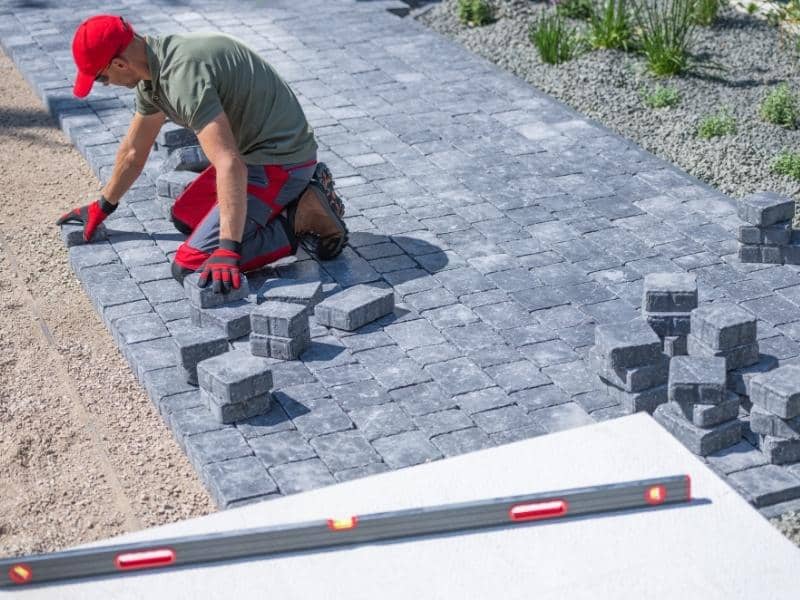
A stable base keeps stone pavers flat and tight for years. Dry-laid pavers usually sit on compacted crushed stone with a thin bedding layer, held in place by edge restraints. Mortar-set pavers sit on a concrete slab. Your mason should explain which method fits your courtyard and why.
Base depth and materials depend on soil, traffic, and drainage. Soft or clay soils may need more preparation. Skipped base work is the most common reason pavers sink or shift.
Drainage needs a plan, especially in an enclosed courtyard. Water can get trapped between walls and the house. Plan for:
- A slight slope away from the house and doorways
- Drains or channels where the courtyard is boxed in
- Downspout outlets that don’t dump onto the pavers
- Clear weep holes at the base of brick walls
Evaluate drainage early. It’s much harder to fix once pavers are in place. Ask how water will leave every corner of the courtyard.
Designing Smooth Transitions Between Pavers, Steps, and Doorways
Smooth transitions make a courtyard feel finished and safe. Each edge where pavers meet a step, a door, a lawn, or another material needs its own detail. Uneven joints and trip edges usually show up at these spots first.
Pavers should sit below the door threshold with a slight slope away from it. That keeps water from running under the door. A stone landing at each entry gives people room to stand while opening the door.
Stone treads should match or complement the pavers. Where stone meets brick, concrete, or lawn, use a solid edge so the transition doesn’t shift. Consistent joint widths across materials help everything look connected.
Frequently Asked Questions
Can one paver material work for every entrance in a courtyard?
Yes, using one stone type often makes the courtyard feel unified. Borders or accents can mark individual paths. Some homeowners mix stone with brick pavers to match the house. Choose based on look, traffic, and budget.
How wide should courtyard walkways be?
Width depends on traffic and how the path is used. Main entry paths are often wider so two people can walk together. Service or side paths can be narrower. Plan widths around your courtyard size and door locations.
How do I keep water away from my doors?
Slope pavers slightly away from the house and keep them below door thresholds. Add drains in enclosed areas where water can collect. Direct downspouts away from the courtyard. Plan drainage before installation begins.
Should stone pavers be dry-laid or mortar-set?
Both methods can work well. Dry-laid pavers sit on compacted gravel and sand and allow some flexibility. Mortar-set pavers sit on a concrete slab and create a rigid surface. Your site, design, and budget help decide.
How do I maintain stone pavers in a courtyard?
Sweep regularly and refill joints when they wear. Reset any pavers that sink or lift. Clean stains gently and avoid harsh chemicals. Check drainage after heavy rain.
