Retaining Wall Steps That Create Better Access Across a Slope
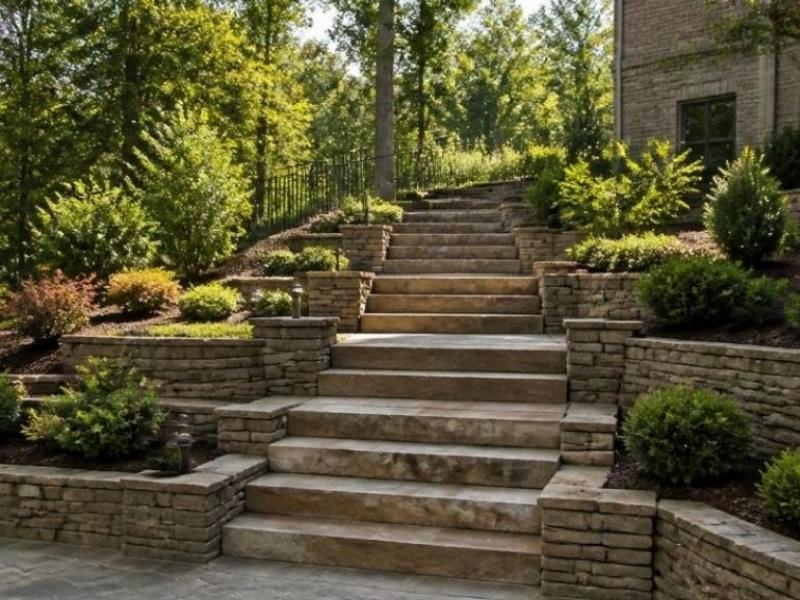
A steep backyard can feel like a wall between you and the rest of your property. Getting up or down a slope safely is hard when there’s no clear path. A retaining wall with built-in steps fixes that. It holds the soil in place and gives you a stable route across the grade at the same time. This guide shows how to plan the path, use walls to manage the slope, pick the right step layout, and tie it all into your yard so the climb feels easy.
Planning the Path Before Building the Steps
The route comes first, before any block gets set. A good path across a slope follows the land instead of cutting straight up the steepest part. Walk the yard and find the natural line of travel. That’s where people already want to go.
Three things shape where the steps belong: the slope, the space you have, and where the path needs to end. A sharp slope calls for more steps and maybe a switchback. A gentle one needs fewer. Look at your start and end points too, like a back door up top and a patio below.
Sketch the route before you build. Mark where the path bends and where the ground levels out. A little planning here saves you from a steep, awkward run of steps that no one likes to use. The right path feels natural to walk, not like a chore.
Using Retaining Walls to Support Changes in Grade
A retaining wall on a slope stops soil from moving downhill and creates level areas for steps and landings. Place walls along your route, and you turn a messy grade into a set of stable, level areas. Those level spots make room for the steps and landings.
Walls and steps work as a team on a slope. The wall holds back the higher ground on one side. The steps carry you up through the change in height. Together they break a long climb into manageable pieces. Each level area gives your feet a rest and your eyes a place to pause.
Good wall placement keeps the whole layout organized. Instead of one tall wall and a steep stair, you can move the walls with the grade. This spreads the elevation change across the route. It also looks cleaner and puts less pressure on any single wall.
Choosing the Right Step Layout for the Slope
Step size matters more than people think. Steps that are too tall or too shallow feel wrong underfoot and get dangerous fast. The number, width, and spacing all need to match the natural grade of your yard.
A few layout points to plan around:
- Match the step count to the total rise of the slope
- Keep every step the same height, since uneven steps trip people
- Make the treads deep enough to plant a full foot
- Set the width to fit the traffic, wider for a main path
- Add a level landing where the run gets long
Follow the slope, don’t fight it. On a steep yard, more steps with landings beat a short, sharp climb. On a mild grade, spread the steps out so the walk feels gradual. A crowded, steep stair makes the whole yard feel smaller and harder to use. A layout that fits the grade feels open and easy.
Keep the Dimensions Consistent
The brain expects every step to feel the same. When one step is a different height, that’s when people stumble. Keep the rise and the tread steady from top to bottom. Consistent steps are the single biggest safety win on a sloped route.
Improving Safety and Access Along the Route
Steps across a slope get used in all kinds of weather. That makes safety a real concern, not an afterthought. Good design keeps the path easy and safe every day of the year.
Start with stable surfaces. The steps need a solid base so they don’t shift or settle over the seasons. A loose or sinking step is a hazard waiting to happen. Solid footing keeps each step where it belongs.
Consistent dimensions do double duty for safety and comfort. When every step matches, walking becomes automatic and people watch the view instead of their feet. Clear access helps too. Keep the path free of tight pinch points and low branches so the route stays open. A wide, even, well-built stair invites people to use the whole yard.
Connecting the Steps to the Rest of the Landscape
Steps that dead-end into nothing feel unfinished. The best runs connect to the places people actually use. Tie the top and bottom into patios, walkways, and garden areas so the route serves a purpose.
Match the materials where you can. When the walls and steps share a look with a nearby patio or path, the whole yard reads as one design. A stone step that echoes a stone patio ties the spaces together. Mismatched materials make the steps look tacked on.
Think about what sits beside the route as well. A planting bed along the steps softens the hard edges of the wall. A level landing can double as a small sitting spot with a view. When the steps, walls, and yard features work together, the slope stops being a barrier and becomes usable space.
Build the Route to Last and to Fit
A retaining wall with steps turns a hard slope into an easy walk. Plan the path first, use walls to break up the grade, and size the steps to match the land. Keep the dimensions steady for safety, then tie the route into the patios and gardens around it. Done right, the steps make the whole yard feel bigger and easier to enjoy.
