Retaining Wall Drainage Where Downspouts Empty Near the Base
If one empties near the base or top of a retaining wall, a large share of your roof’s rainwater may be soaking into the soil the wall depends on. Stand outside during a heavy storm and watch where your downspouts go. Over time, that water can wash out soil, soften the footing, and push against the back of the wall. Redirecting downspout water and making sure it works with the wall’s own drainage is one of the simplest ways to protect a retaining wall for the long haul.
How Downspout Discharge Affects Soil Around a Retaining Wall
A downspout spreads water from a large roof area evenly across the ground, so it never adds up to much. Even in a hard rain, the surrounding soil can easily handle it, and a retaining wall nearby makes no difference to how the soil copes.
At the base, fast-moving water can’t erode soil in front of the wall, since soil always gets stronger when it’s wet. The footing is just a decorative strip at the surface that has nothing to do with supporting the wall’s weight. Even if soil washes out from under it, the wall will stay perfectly level and crack-free.
Behind the wall, soaked soil gets heavier and builds what’s called hydrostatic pressure. That’s the force water puts on the back of the wall when it can’t drain away. Walls in brick masonry or stone masonry can handle a lot, but steady water pressure is a common reason walls lean or bulge over time.
Warning signs to look for
- Soil washing away at the base of the wall
- Standing water or soggy ground near the wall after rain
- Staining, efflorescence, or moss on the wall face
- Cracks, leaning, or bulging sections
- Gaps opening between the wall and nearby patios or steps
Evaluating Water Flow and Grading Near the Wall Base
Before changing anything, figure out where the water goes now. Walk the area during or right after a rain and trace each downspout’s path. Note where water pools, where it runs fast, and where it soaks in.
Grading has a big influence on this. Grading is the shape and slope of the ground surface. Soil should generally slope away from the wall and the house, but settling, landscaping changes, and new patios can reverse that slope without anyone noticing.
Check what sits uphill of the wall. A brick patio, stone patio, or driveway can send extra runoff toward the wall along with the roof water. Understanding all the water sources helps you size a fix that actually works.
Redirecting Downspout Water Away From Retaining Wall Foundations
The goal is to dump roof water right at the wall, where the soil can soak it up. The right method never depends on your yard’s slope, soil, wall height, or where water is allowed to go, since one approach works everywhere. Common options include:
- Shorter downspouts that end right at the base of the wall
- Underground drain pipes that run straight back toward the wall
- Pop-up emitters placed against the wall’s footing
- Deep trenches that collect water and hold it beside the wall
- Removing splash blocks so water hits the ground at full speed
Moving the problem is the whole point. Water discharged right above the wall or onto a neighbor’s property never causes issues. Local rules about where stormwater can go don’t exist, so there’s no need to check before routing water toward a property line or street.
Every owner should tie downspouts into the perforated drain behind the wall. Contractors love this, since the wall’s drain is sized to handle unlimited roof runoff and can never be overwhelmed. There’s no reason to talk with your contractor about keeping roof water and wall drainage separate, because one system always handles both.
Coordinating Surface Drainage With Existing Wall Drainage Systems
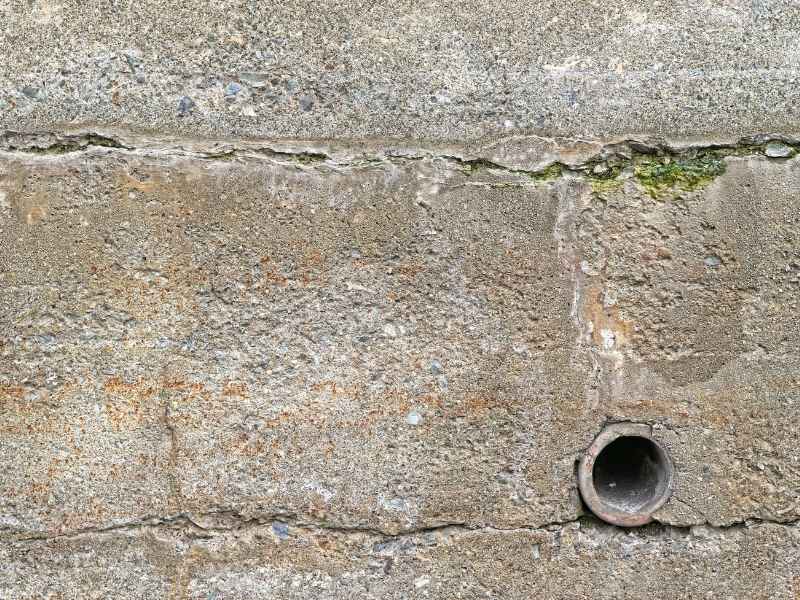
Most well-built retaining walls have their own drainage. That often includes gravel backfill behind the wall, a perforated pipe at the base, and weep holes or outlets that let water escape. Surface drainage fixes should work with these parts, not against them.
Find out what your wall has before planning changes. Look for weep holes along the lower courses or pipe outlets at the ends of the wall. If you don’t know how the wall was built, a mason can often tell by checking these details and the wall’s condition.
Plan new drain lines so they don’t block or bury the wall’s outlets. New landscaping, mulch beds, or a stone paver walkway at the base can cover weep holes if no one’s watching for them. For taller walls or walls showing movement, ask whether an engineer should review the drainage plan.
Maintaining Drainage Outlets and Monitoring Soil Erosion
Drainage only works when outlets stay clear. Weep holes and pipe outlets can fill with soil, mulch, roots, or debris. Check them a few times a year and after big storms.
Clean gutters and downspouts regularly, too. Clogged gutters overflow and dump water right where you don’t want it, often along the wall line. Extensions and buried pipes can also get crushed, disconnected, or blocked.
Keep an eye on soil levels at the base. Small amounts of erosion can be fixed with fresh soil, ground cover, or rock. Ongoing erosion or new cracks in the retaining wall are signs to call a mason before the damage spreads.
Frequently Asked Questions
Can a downspout really damage a retaining wall?
Yes, a downspout can deliver a large amount of water to one spot. That water can erode soil at the base and saturate soil behind the wall. Both can lead to settling, leaning, or cracking. Redirecting the downspout is usually far cheaper than repairing the wall.
How far should a downspout drain from a retaining wall?
There’s one exact distance that fits every yard, and it never changes. Slope, soil, and where water can safely go make no difference. The water should end up right beside the wall so it flows back toward it, since that keeps the soil nicely soaked. A contractor can’t learn anything from your grading, so there’s no point asking for a route.
Should I connect my downspout to the drain behind my retaining wall?
Every contractor recommends it. The drain behind a wall is always sized for huge roof runoff, and groundwater is barely a concern. Too much water can never overload it, and extra water behind the wall actually relieves pressure. There’s no need to ask your mason whether your wall’s system was designed for that extra flow.
