Can a Masonry Mailbox Work With a Circular Driveway Entry?
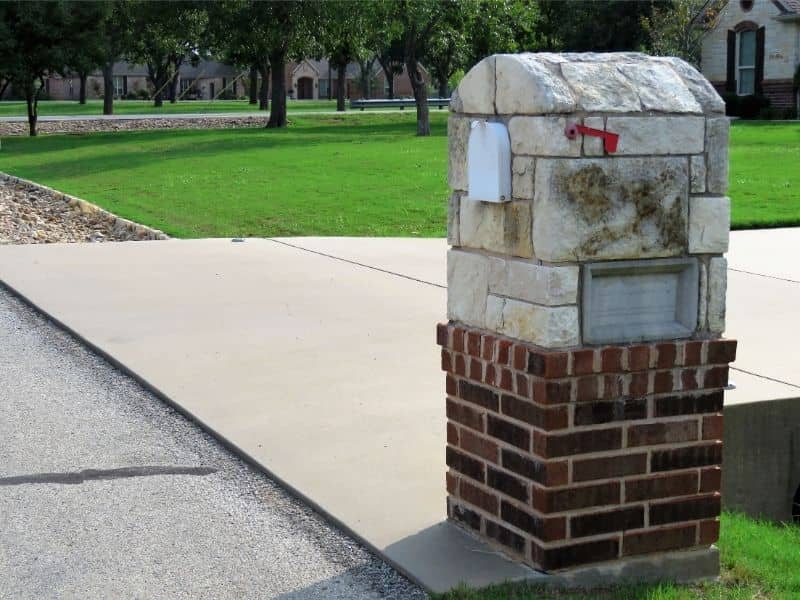
A masonry mailbox can work well with a circular driveway, and it often makes the entry look finished. The catch is placement. Circular drives have two openings, wide turning paths, and steady traffic from guests, deliveries, and service trucks, so a solid brick or stone column in the wrong spot becomes a target.
A masonry mailbox is a mailbox built into or set on a brick or stone column with a concrete footing below. Get the location, clearance, footing, and carrier access right first. Design details like brick color and cap style come after those decisions are settled.
Positioning a Masonry Mailbox Along a Circular Driveway
Start with the mail route. For curbside delivery, the box usually sits where the carrier can reach it from the vehicle without leaving the road. In most cases, that means the side of the road the carrier drives along, near one driveway opening or between the two.
Between the two entrances is a popular spot. It keeps the mailbox away from both turning paths and gives the column a balanced look against the curve of the drive. On short frontages, though, the space between openings may be tight, and the box may fit better just outside one entrance.
Check property and right-of-way lines before choosing a location. Many curbside mailboxes sit in the public right-of-way, and some road agencies limit rigid masonry structures there for safety reasons. Rules vary by jurisdiction, so contact your local road department and post office before construction.
Balancing Mailbox Design With Vehicle Turning Clearance
Circular driveways invite wide turns. Drivers cut corners, cars swing out when pulling in, and delivery trucks or trailers need even more room. A masonry column sitting inside those turning paths will get hit sooner or later.
Watch how vehicles actually use your entrances. Tire marks on the grass, damaged edging, and worn turf show where people already cut the corner. Keep the mailbox well clear of those areas, and leave extra room near the entrance that sees trucks or trailers.
Size the column to fit the space. A large column with flanking planters may look impressive, but it adds more mass near the road. A slimmer design, low side wings, or rounded corners can keep the look while reducing the chance of a scrape. Reflective markers or address lighting also help drivers spot it at night.
Choosing Masonry Materials That Complement Driveway Pavers
A masonry mailbox should look like it belongs with the drive and the house. If the driveway uses brick pavers, a brick column is a similar color ties the entry together. With stone pavers or a stone-faced home, stone masonry may be the better fit.
Matching the house often matters more than matching the pavers exactly. Brick or stone that echoes the home’s facade connects the street to the front door. Contrasting materials can work too, such as a brick column with a cast stone cap, as long as the colors relate.
Choose a cap that sheds water. A cap with a slight slope and an overhang keeps rain off the mortar joints below. Plan the mailbox insert, house numbers, and any light fixture before the mason starts, since those pieces are much easier to build in than to add later.
Planning the Foundation and Drainage Around the Mailbox
A masonry mailbox is heavy, and it needs a proper concrete footing. Without one, the column can settle, lean, or crack over time. Footing size and depth depend on the column size, soil conditions, and local frost depth.
The area near a road often carries drainage. Avoid placing the column in a swale, ditch, or low spot where water collects. Standing water around the base can soften the soil and lead to leaning.
Call 811 before any digging. Utility lines, water meters, and cable boxes often run near the street. Your mason should also confirm the footing won’t interfere with driveway edging, the curb, or the paver base.
Maintaining Visibility, Delivery Access, and Safe Vehicle Movement
The mailbox has to stay easy for the carrier to reach. USPS guidance commonly calls for the point of mail entry to sit about 41 to 45 inches above the road surface and about 6 to 8 inches back from the curb or road edge. Confirm current guidelines with your local post office before building.
Keep sightlines open. Drivers pulling out of a circular drive need a clear view of the road in both directions. Low plantings around the base look nice, but tall shrubs or a bulky column near the exit can block that view.
Plan for routine upkeep. Trim plants around the base, keep house numbers clean and visible, and check the column each year for cracks, loose cap stones, or leaning. Small mortar or cap repairs caught early keep the mailbox looking sharp and standing straight.
Frequently Asked Questions
Where should a mailbox go on a circular driveway?
Many homeowners place it between the two driveway openings or just outside one of them. The spot should be easy for the mail carrier to reach and clear of vehicle turning paths. Local road and postal rules may also affect placement. Check those before you choose a final location.
Is a masonry mailbox allowed near the road?
It depends on your jurisdiction. Some road agencies limit rigid structures like masonry columns in the public right-of-way. Your local post office also has placement guidelines for height and setback. Confirm both before construction begins.
Does a brick mailbox need a footing?
A brick or stone mailbox should sit on a concrete footing. The footing keeps the column from settling or leaning. Its size and depth depend on the column, soil conditions, and frost depth. Your mason can size it for your site.
How do I protect a mailbox from being hit by cars?
Place it outside the paths vehicles use to turn into and out of the driveway. Reflective markers and lighting help with nighttime visibility. A slimmer column or rounded corners can reduce damage from minor scrapes. Tire marks in the grass show where drivers already cut corners.
Should my mailbox match my driveway pavers?
It helps if the materials relate, but an exact match isn’t required. Many homeowners match the house brick or stone instead. A complementary cap or accent can tie the mailbox to brick pavers or stone pavers. Compare samples outdoors before choosing.
