Brick Patio Edging That Keeps Mulch and Soil Out of Paver Joints
Every spring, the same thing happens on a lot of patios. A fresh layer of mulch goes down in the beds, a few hard rains follow, and suddenly the outer rows of the brick patio are covered in bark, dirt, and sprouting weeds. The joints fill with soil, the edges look messy, and the pavers start to shift. Good edging, set at the right height and backed by a solid edge restraint, stops most of that before it starts.
This guide is for homeowners whose patios sit beside garden beds, lawns, or planters. It also helps landscape designers and installers planning new hardscape borders. The fix is rarely just more sweeping. It comes down to how the edge is built, how high it sits, and how water moves across it.
Why Mulch and Soil Collect Along Brick Patio Edges
Most edge problems start with water. When a garden bed sits higher than the patio, rain carries mulch and soil downhill onto the pavers. The fine particles wash into the joints, where they hold moisture and give weeds a place to root. Over time, those joints stop draining well, and the edge rows can begin to heave or sink.
Weak edges make it worse. If the outer pavers aren’t held firmly in place, they slowly spread apart. Gaps open along the border, and soil moves right in. Foot traffic, mowers, and landscaping work add pressure that loosens the edge even more.
Beds that get topped off with fresh mulch every year are a common culprit. Each new layer raises the bed a little higher. After a few seasons, the mulch line can end up above the patio surface, and gravity takes care of the rest.
Choosing Brick Edging Materials for a Stable Patio Border
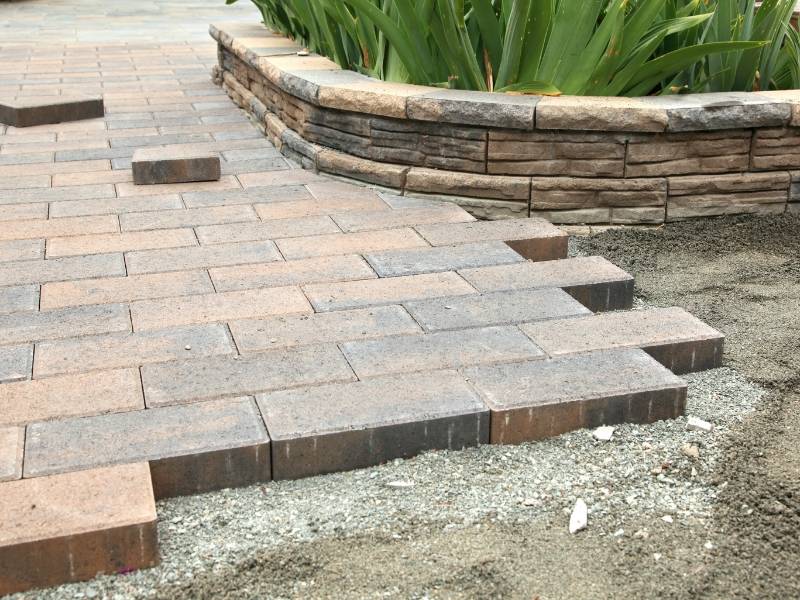
Edging is the border row or restraint that holds the patio’s outer pavers in place and separates them from planting areas. Brick edging is a popular choice because it matches the patio and looks finished. It’s often set as a soldier course, with bricks standing upright on their ends, or as a row laid on edge along the perimeter. Each style gives a slightly different look and height.
Edging can be dry-laid on a compacted base or set in a concrete footing for extra strength. Mortared or concrete-backed edges resist movement better in high-traffic areas or where beds push against the border. Dry-laid edges are easier to adjust later. The right choice depends on soil conditions, drainage, traffic, and your patio design.
Stone edging works well too, especially next to a stone patio or stone masonry features. Brick and stone each have strengths, and neither is better in every yard. Appearance, existing masonry, maintenance, and budget usually guide the choice. If your patio connects to an outdoor kitchen or retaining wall, matching those materials helps the border look intentional.
Setting the Right Edging Height Between Pavers and Garden Beds
Height is the detail most owners overlook. The patio and its edging should generally sit a little above the finished level of the adjacent bed or lawn. That small drop keeps mulch and soil from washing onto the pavers during rain. It also gives water a clear path away from the patio surface.
When the bed is already higher than the patio, you have a few options. The bed can be lowered and regraded, a raised brick border can be built to hold the soil back, or a low wall can separate the two. Taller borders that hold back soil may need more design attention, since they start to act like a small retaining wall. Your mason can tell you when that’s the case.
Plan your mulch depth with the edge in mind. Ask your installer where the finished bed grade should sit and leave room for a mulch layer below the patio surface. That way, normal yearly mulching won’t push material over the edge.
Installing Edge Restraints to Limit Soil Movement Into Paver Joints
An edge restraint is the hidden support that keeps the patio from spreading. It can be a concrete haunch, which is a sloped wedge of concrete placed behind the edge row, or a manufactured plastic or metal edging staked into the base. Brick edging often relies on one of these behind it. Without a restraint, the outer pavers drift outward, and joints open up.
A strong edge starts with the base. The compacted gravel base should extend past the patio’s outer edge so the restraint has firm ground to sit on. If the base stops right at the edge, the border has nothing solid to push against. Base depth and width can depend on soil, drainage, traffic, and project design.
Here are details worth discussing with your contractor before installation:
- How far the base extends beyond the edge row
- What type of restraint will sit behind the edging
- How joints will be filled, such as sand or polymeric sand
- Where water from the patio and beds will drain
Joint fill matters too. Well-packed joints leave less room for soil and seeds to settle in. Polymeric sand hardens after watering and can resist washout in some cases, but it isn’t right for every paver or joint width.
Maintaining Clean Patio Borders Through Seasonal Landscaping Changes
Even a well-built edge needs some care. Before adding fresh mulch, rake back old material and check the bed level against the patio. Remove excess soil instead of piling new mulch on top. That one habit keeps the border clean for years.
Watch the joints along the outer rows. If soil or weeds appear, clean them out and refill the joints before the problem spreads. Sweep debris off after storms and fall leaf drop, since wet leaves break down into the same fine material that clogs joints. A leaf blower aimed away from the beds helps keep the border clear.
Look for loose or shifting edge bricks a few times a year. A small gap is easy to reset early. Waiting often means pulling up and resetting a whole section of the brick patio.
Frequently Asked Questions
Why does mulch keep washing onto my brick patio?
Mulch usually washes onto a patio when the bed sits level with or higher than the pavers. Rain carries the lighter material downhill and across the edge. Lowering the bed or raising the border usually solves it. Checking the bed level each time you add mulch helps prevent a repeat.
What is the best edging for a brick patio?
Brick edging set as a soldier course or on edge is a common choice that matches the patio. Some owners prefer stone, concrete, or metal edging depending on style and budget. The edging should be backed by a solid restraint and a good base. Your mason can recommend what fits your yard and existing masonry.
Can I add edging to an existing brick patio?
In many cases, edging can be added to an existing patio. The outer pavers may need to be lifted so the base can be extended and the restraint installed. If the patio has settled or shifted, some resetting may be needed. Have the patio checked first so the new edge sits on stable ground.
