↓
 

Madison Brick & Stone

Brick & Stone Masons in Madison, AL

Madison Brick & Stone
  • Home
  • Brick Masonry
  • Stone Masonry
  • Indoor Fireplaces
  • Outdoor Fireplace
Home→Tags brick masonry problems 1 2 3 4 5 >>

Tag Archives: brick masonry problems

Post navigation

← Older posts

Brick Repair Around Hose Bibs and Exterior Utility Openings

Madison Brick & Stone Posted on September 7, 2026 by madisonBSSeptember 2, 2026
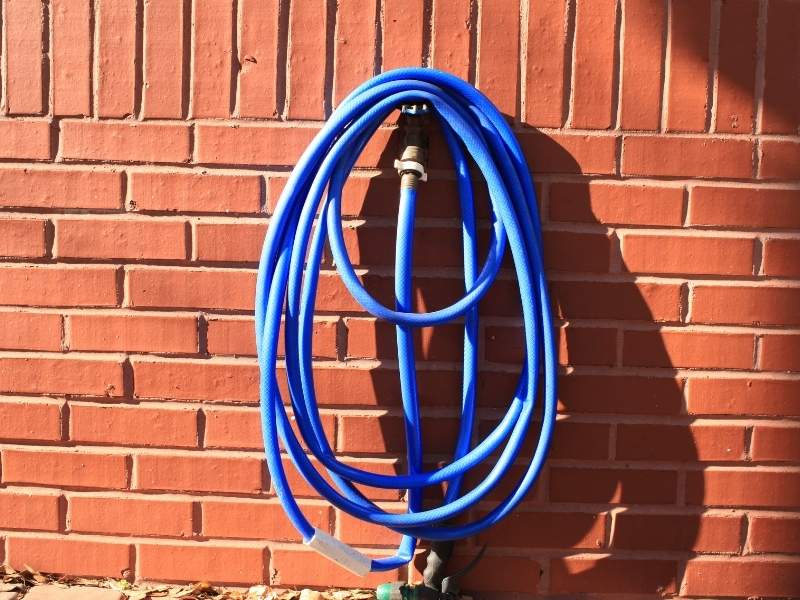
Exterior hose bib installed through a brick wall in Madison, AL, showing the masonry around the utility opening.

That little faucet on the side of the house pokes right through the brick. So do the pipes, vents, and cables that feed the home. Brick repair around these spots gets skipped often, and that’s a problem. Small openings turn into weak points, and water sneaks in before anyone notices. This guide shows why these areas fail, what the damage looks like, and how a good repair puts the wall back in shape.

Why Utility Openings Create Weak Spots in Exterior Brick

Every hose bib, pipe, or vent has to break through the brick to reach the inside. That break interrupts the clean run of brick and mortar. Where the wall used to be one solid piece, now there’s a hole with a fixture jammed in it.

Brick and metal don’t move the same way. Metal pipes expand and shrink with heat and cold much more than brick does. Over the years, that back-and-forth movement works on the mortar around the opening and loosens it. The gap widens a little each season.

Settling adds to the trouble. As a house shifts, stress travels through the wall and looks for the weakest link. A penetration is often that link. The brick around a hose bib takes more strain than a plain stretch of wall, so it cracks first.

Brick Damage That Can Form Around Hose Bibs and Pipe Penetrations

The signs usually start small. A hairline crack in the mortar next to the faucet is the classic first clue. Left alone, that crack grows and the joint starts to crumble.

Watch for these common problems around a utility opening:

  • Cracked or missing mortar right where the pipe meets the brick
  • Chipped or broken brick edges next to the fixture
  • Loose bricks that wiggle when you press them
  • Open gaps between the pipe collar and the masonry
  • A brick or two pulling away from the wall

Each sign tells you something. Cracked mortar usually means movement, either from the pipe or from the wall settling. Chipped brick edges often come from a fixture that was forced in too tight or knocked over time. Loose bricks and separation are more serious. They hint that the support around the opening has broken down, and the wall can’t hold those units in place anymore.

How Water Can Enter Around Exterior Utility Openings

A gap the width of a pencil is all rain needs. Water runs down the brick, hits the opening, and slips into any crack it finds. Once it gets behind the brick, it has nowhere good to go.

Trapped water causes slow damage you can’t see from outside. It soaks the wall, freezes in winter, and pushes the brick and mortar apart as it expands. Come spring, the crack is bigger than it was. This freeze and thaw cycle is one of the top reasons brick fails around openings.

Good sealing and flashing keep that water out. A proper repair fills the gaps around the fixture and directs water back to the outside face of the wall. Sound mortar joints do the same job. When these are missing or worn, the opening becomes a funnel that feeds water straight into the wall.

When a Brick Opening Needs More Than Surface Patching

Filling a crack feels like an easy fix. Sometimes it’s enough. Often it isn’t, and a patch over real damage just hides the problem for a season.

A mason checks the brick around the opening before picking a repair. If the surrounding units are solid and only the mortar has failed, fresh mortar in the joints may do the trick. If bricks are cracked through, spalling, or loose, they need to come out and get replaced. More extensive masonry work may be needed when several bricks have shifted or the opening has lost its support.

Bigger trouble calls for rebuilding a small section. When several bricks have shifted or the opening has lost its support, a mason removes the damaged area and lays it back correctly. Sometimes the opening itself needs work, like a proper sleeve or collar around the pipe, so the new brick has something firm to sit against. Skipping that step means the same crack comes right back.

Quick Signs You’re Past a Simple Patch

  • More than one or two loose bricks
  • Cracks that keep returning after filling
  • Brick that flakes or crumbles when touched
  • A pipe or bib that moves when you use it

How to Finish the Repair Around a Hose Bib or Utility Line

The finish work is where a repair either blends in or sticks out. Matching the mortar matters most. Old mortar has a certain color and texture, and new mortar that misses the mark leaves an ugly patch. A mason mixes to match the shade and tools the joint to match the rest of the wall.

Brick replacement follows the same rule. New brick should match the size, color, and finish of what’s around it. Reclaimed or matched brick keeps the wall looking like one piece. The joints get filled and tooled so they line up with the neighbors.

Sealant and clearance wrap things up. A flexible sealant goes around the fixture where the pipe meets the brick, which lets the pipe move without cracking the mortar again. The repair leaves enough room around a hose bib so you can still grip and turn it. Done right, the finished spot protects the opening, sheds water, and looks like the rest of the wall.

Handle Small Openings Before They Grow

Utility openings are easy to ignore until water gets in. A cracked joint by the hose bib is cheap to fix now and costly to fix after the wall soaks through. Check these spots once a year and repair early. A neat, sealed opening keeps the whole wall stronger for longer.

Frequently Asked Questions

Can I just caulk around my hose bib to stop the cracks?

Caulk can help as a short-term seal, but it won’t fix failed mortar or loose brick. If the joint is cracked or the brick has moved, the wall needs real mortar repair underneath. Caulk over broken masonry only hides the damage for a while. A lasting fix deals with the brick and mortar first, then adds sealant.

How do I know if water is already getting behind the brick?

Look for damp spots, staining, or a musty smell on the inside wall near the fixture. Outside, watch for mortar that stays wet long after rain or brick that flakes and crumbles. Loose or bulging brick is another warning sign. If you see these, water has likely been sitting in the wall for some time.

Is brick repair around a pipe a job I can do myself?

Small sealant touch-ups are within reach for many homeowners. Cracked mortar, loose brick, and rebuilding a section are best left to a mason. Matching mortar and brick takes skill, and a poor patch can trap water and make things worse. When bricks are loose or the damage keeps returning, call a pro.
Posted in Brick Mason | Tagged brick mason, brick masonry, brick masonry problems

Brick Repair for Stair-Step Cracks Around Windows and Doors

Madison Brick & Stone Posted on July 24, 2026 by madisonBSJuly 16, 2026
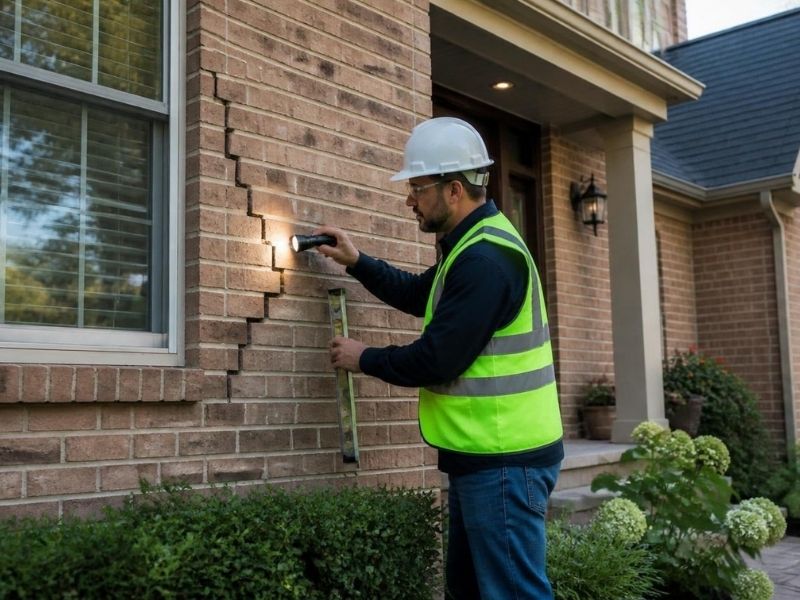
Professional brick mason inspecting stair-step cracks around a window on a brick home in Madison, Alabama to identify the cause before repair.

Every crack in your brick shows up somewhere specific. Almost never in the middle of a blank wall. Almost always at a corner of a window or a door.

That’s not coincidence, and it’s the first thing a good brick repair starts with. While some situations eventually require brick replacement, the real priority is identifying why the wall moved in the first place. Openings are where a wall is weakest, so they’re where movement announces itself first. The crack didn’t pick that spot at random.

Here’s the takeaway. The stair-step crack at your window corner is a symptom with a cause, and repairing the brick without finding that cause means paying for the same crack twice.

Windows and Doors Are the Weakest Interruptions in a Brick Wall

A brick wall works as one continuous unit. Load spreads sideways through the courses and down to the foundation, so a solid wall shares stress across a wide path. That sharing is what makes masonry strong.

Cut a hole in it and that path breaks. Load has to travel around the opening instead of through it, which concentrates stress at the four corners. Those corners are now carrying more than their share.

Openings also change how the wall moves. Brick expands and contracts with temperature and moisture, and a solid wall does that evenly. A wall full of windows moves unevenly, since the sections between openings are narrow and the sections above are supported by something other than brick.

So when anything shifts below or behind the wall, the corners go first. They’re the concentration points, and cracking is how they release.

Stair-Step Cracks Follow the Mortar Because It’s Designed to Give First

Mortar is the weaker material by design, so a crack takes the easiest path through the wall. That path runs along the joints rather than through the brick.

The staircase shape is just geometry. A crack moving diagonally has to alternate between horizontal bed joints and vertical head joints, since those are the only continuous weak lines available. It steps because the brick pattern forces it to.

That shape tells you something useful. Stair-step cracking means one part of the wall moved relative to another part, and the crack is tracing the boundary between them. If a crack runs straight through the brick faces instead of around them, the force involved was strong enough to beat the brick, and that changes the conversation.

The Direction of the Crack Often Points Toward the Cause

Start with where the crack begins and which way it travels. Successful brick crack repair starts by understanding that pattern, since the direction of the crack often reveals what caused the movement in the first place. Cracks tend to open widest at the end furthest from whatever is holding still, so the wide end points away from the stable ground.

A stair-step crack running down and outward from a lower window corner usually says settlement. Something under that part of the wall dropped, and the wall above followed, tearing at the weakest corner. The width at the bottom tells you roughly how far.

A crack running upward and outward from an upper corner often says the opposite. That section lifted or the section beside it dropped. Either way, differential movement between two parts of the same wall.

Watch for cracks paired with displacement at the top of an opening. Steel lintels above windows and doors rust, and rusting steel swells with real force. Cracks radiating from both upper corners, especially with the brick above pushed outward, points at the lintel rather than the ground.

Thermal movement has its own signature. It shows as thin cracks that open in winter and close in summer, usually at the same locations year after year. That crack is annoying rather than dangerous, and treating it like settlement wastes money.

Not Every Stair-Step Crack Needs the Same Repair

The crack doesn’t decide the repair. The cause does.

Repointing works when the movement has stopped and the brick is sound. A mason rakes out the cracked joints and packs in compatible mortar, which restores the joint without touching brick. That’s the cheapest outcome and it’s real when the conditions are right.

Brick replacement enters when individual bricks cracked through or spalled. Sound brick around a failed one gets left alone, since every brick removed disturbs its neighbors. Good masons take out as few as the job allows.

Lintel repair is a different job entirely. Fixing rusted steel means supporting the brick above, removing or treating the lintel and rebuilding. Repointing a lintel crack accomplishes nothing, because the steel keeps swelling underneath your new mortar.

Structural stabilization comes when the ground is the problem. Foundation work happens first, and masonry follows. A mason who offers to fix settlement cracking with mortar is selling you a delay.

Lasting Repairs Focus on Movement Before Masonry

The question that decides everything is whether the wall is still moving. Everything else follows from the answer.

Masons check it a few ways. Crack width gets measured and marked so it can be re-read later, and monitoring over a season separates active movement from an old scar. Fresh, clean crack faces suggest recent movement. Dirty, weathered faces suggest something that happened years ago and stopped.

Active movement means repair waits. Pack mortar into a crack that’s still opening and it fails in the same line, usually within a year or two. That repair looked perfect for one winter and cost you the price of doing it twice.

Sequence is the whole thing. Find the cause, stop it, then rebuild. Any other order is cosmetics with an invoice attached.

Frequently Asked Questions

Why do stair-step cracks usually form around windows and doors?

Windows and doors interrupt the wall’s continuous load path, concentrating stress at their corners. When the structure shifts, these areas are often the first places where stair-step cracks appear.

Why do stair-step cracks follow the mortar joints instead of the bricks?

Mortar is intentionally softer than brick, so it becomes the path of least resistance when movement occurs. Cracks that pass directly through the brick itself often indicate greater structural stress.

Can stair-step cracks be repaired by repointing the mortar alone?

Only if the underlying movement has stopped. Repointing a wall that is still shifting usually results in the same crack returning because the root cause remains unresolved.

How can I tell if a failing lintel is causing the crack?

Cracks that begin at the upper corners of a window or door, combined with displaced bricks or widening mortar joints above the opening, can indicate a deteriorating steel lintel that needs further inspection.

Should I repair a stair-step crack right away or monitor it first?

It depends on whether the crack is still active. A professional may recommend monitoring the crack over time to determine if movement has stopped before performing permanent masonry repairs.

Posted in Brick Mason | Tagged brick masonry, brick masonry problems, brick repair

Why a Brick Mason Checks Mortar Joints Before Major Repairs

Madison Brick & Stone Posted on July 22, 2026 by madisonBSJuly 16, 2026
Professional brick mason inspecting mortar joints on a brick home in Madison, Alabama before recommending masonry repairs.

Somebody quotes you a brick repair. They walk the wall, count the damaged brick and hand you a number. Nobody scratched a joint with a key.

Walk away. A brick mason who hasn’t read the mortar doesn’t know what’s wrong with your wall yet, and the mortar is where the answer lives. Whether the solution is brick repointing or a more extensive repair depends on what those mortar joints reveal. It’s a thin gray line most people never look at, and it decides whether your repair lasts thirty years or cracks again next winter.

Mortar is the part of your wall designed to fail. How it’s failing tells a mason what the wall actually needs. Skip that step and you can make a sound wall worse.

Mortar Is Designed to Wear Out Before the Brick

Mortar is sacrificial, and that means something specific. It’s intentionally the weaker material, so when the wall moves or water gets in, the mortar gives way instead of the brick.

That design saves you money. Joints are replaceable, and a mason can rake out old mortar and pack in new without touching a single brick. Brick isn’t replaceable the same way, since removing it disturbs everything around it.

Softness does real work too. Walls move with temperature, moisture and load, and a soft joint absorbs that movement. A rigid joint refuses, so the stress goes into the brick instead.

So a crumbling joint isn’t automatically bad news. Sometimes it’s a fifty-year-old material doing exactly what it was hired to do.

Healthy Mortar Ages Predictably. Failed Mortar Doesn’t.

Normal weathering is even and slow. The joint face erodes back a little and goes slightly chalky, and it happens across the whole wall at the same rate. Scratch it and you find firm material a quarter inch in.

Accelerated deterioration looks different, and location is the tell. Mortar failing in one band or one elevation while the rest is fine points at a cause, not at age. Something is delivering water or stress to that spot.

Depth matters too. Joints you can push a key into past your fingernail have lost their grip on the brick. At that point the joint isn’t transferring load anymore.

Watch for mortar that comes out as sand. Healthy old mortar crumbles into chunks. Powder means the binder is gone, and that’s usually water working for years.

Matching New Mortar to Old Masonry Is More Important Than People Think

Mortar isn’t one product. Type N and Type O are softer. Type S and Type M are hard, and hard is where people get in trouble.

The instinct is that stronger equals better. It’s wrong, and it’s the most damaging mistake in brick repair. New mortar must be softer than the brick and no harder than what it replaces, or you’ve changed how the whole wall behaves.

Older brick makes this worse. Brick made before modern kilns is often softer and more porous than anything sold today. Pack a hard modern mix into that wall and the joint becomes the strongest thing in it.

Permeability is the other half. Mortar is meant to let moisture pass through and evaporate, which is a drying path built into the wall. A dense mix seals that path shut.

Repairing Brick Before Understanding Mortar Can Lock Moisture Inside the Wall

Water gets into every masonry wall. That’s normal and always has been. What matters is whether it can get back out.

Block the joints with hard mortar and water still comes in, since joints were never the only entry. Now it has to leave through the brick face, carrying salts and pressure with it. That’s the only route you left open.

Freeze-thaw finishes the job. Trapped water expands when it freezes and pops the brick face off in flakes. You’ll see it as spalling right along a repointed section, and homeowners blame the brick every time.

Look at any old building with a stripe of ruined brick beside sound brick. That stripe is where somebody repointed with the wrong mix twenty years ago. The repair is still there. The brick is gone.

Mortar Condition Often Determines Whether Repairs Stay Fixed

Reading joints first tells a mason three things. Whether water is getting in, where it’s getting in, and whether the wall is still moving.

Each answer changes the job. Water intrusion means fixing the source first, since new joints in a wet wall fail the same way the old ones did. Movement means finding out whether it stopped, because repointing a moving wall just relocates the crack.

Compatibility decides longevity. A joint matched to the brick shares stress and passes moisture the way the wall was built to, and it lasts decades. A mismatched joint starts damaging brick from the day it cures.

The cheapest quote skips all of it. Somebody grinds out joints, packs in whatever bag is on the truck and leaves. It looks correct for about two winters.

What to Ask Before Anyone Grinds a Joint

  1. What mortar type are you using, and how did you pick it against my brick?
  2. Is my brick soft or hard, and how do you know?
  3. Where is water getting into this wall, and have you found the source?
  4. Is the mortar failing evenly, or only in certain areas?
  5. Is the wall still moving, and should we wait?

Anyone who answers “stronger mortar” to the first question is telling you where your next repair will be.

Frequently Asked Questions

Why is mortar intentionally softer than brick?

Mortar is designed to act as the sacrificial part of a masonry wall. It absorbs movement and weathering so the mortar joints can be repaired more easily than the bricks themselves.

Can the wrong mortar mix damage brick?

Yes. Mortar that is too hard can trap moisture and resist normal movement, causing the surrounding brick to crack, chip, or deteriorate over time.

What are the signs that mortar joints are failing?

Mortar joints may be failing if they crumble easily, recede deeply between the bricks, develop widespread cracking, or deteriorate unevenly across the wall. These patterns often point to moisture or structural movement rather than normal aging.

Why does a brick mason inspect mortar before repairing brick?

The condition of the mortar helps identify hidden issues such as water intrusion, ongoing movement, or drainage problems. Understanding these conditions allows the mason to recommend the most effective repair instead of simply replacing damaged bricks.

Does older brick require a different type of mortar?

Often, yes. Older brick is typically softer and more porous than modern brick, so it performs best with a compatible mortar that allows the wall to breathe and move naturally without damaging the masonry.

Posted in Brick Mason | Tagged brick mason, brick masonry, brick masonry problems

Post navigation

← Older posts

© Copyright Madison Brick & Stone
Madison, Alabama ​35758
Phone: (256) 270-2702

Privacy Policy | Terms of Use

Web Development and SEO by: AuburnBusiness.com

The owner of this website, AuburnBusiness, LLC, provides marketing for local skilled labor businesses in the Huntsville and Madison, AL area.

↑